Spring 2023

AquaTech

Smart Goldfish

AquaTech is my bachelor’s graduation design project, exploring how modular hardware and a companion app could support daily care on family-run goldfish farms in my hometown Fuzhou, one of the biggest goldfish cities in China. The project brings together local site observations, exploratory research, product development and interface design (app icons are from Figma Template) to address routine monitoring, feeding and access to care information.

​

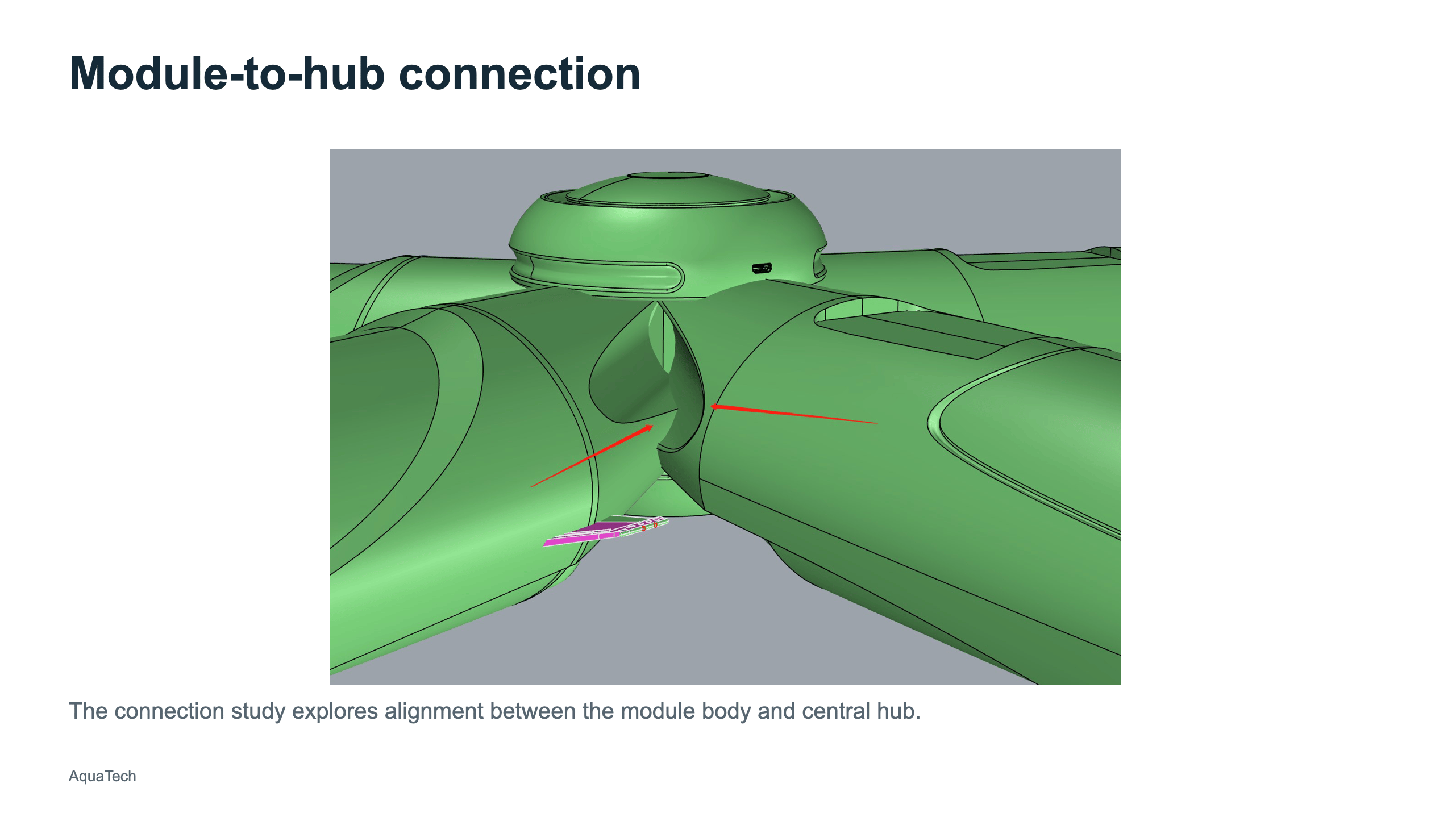
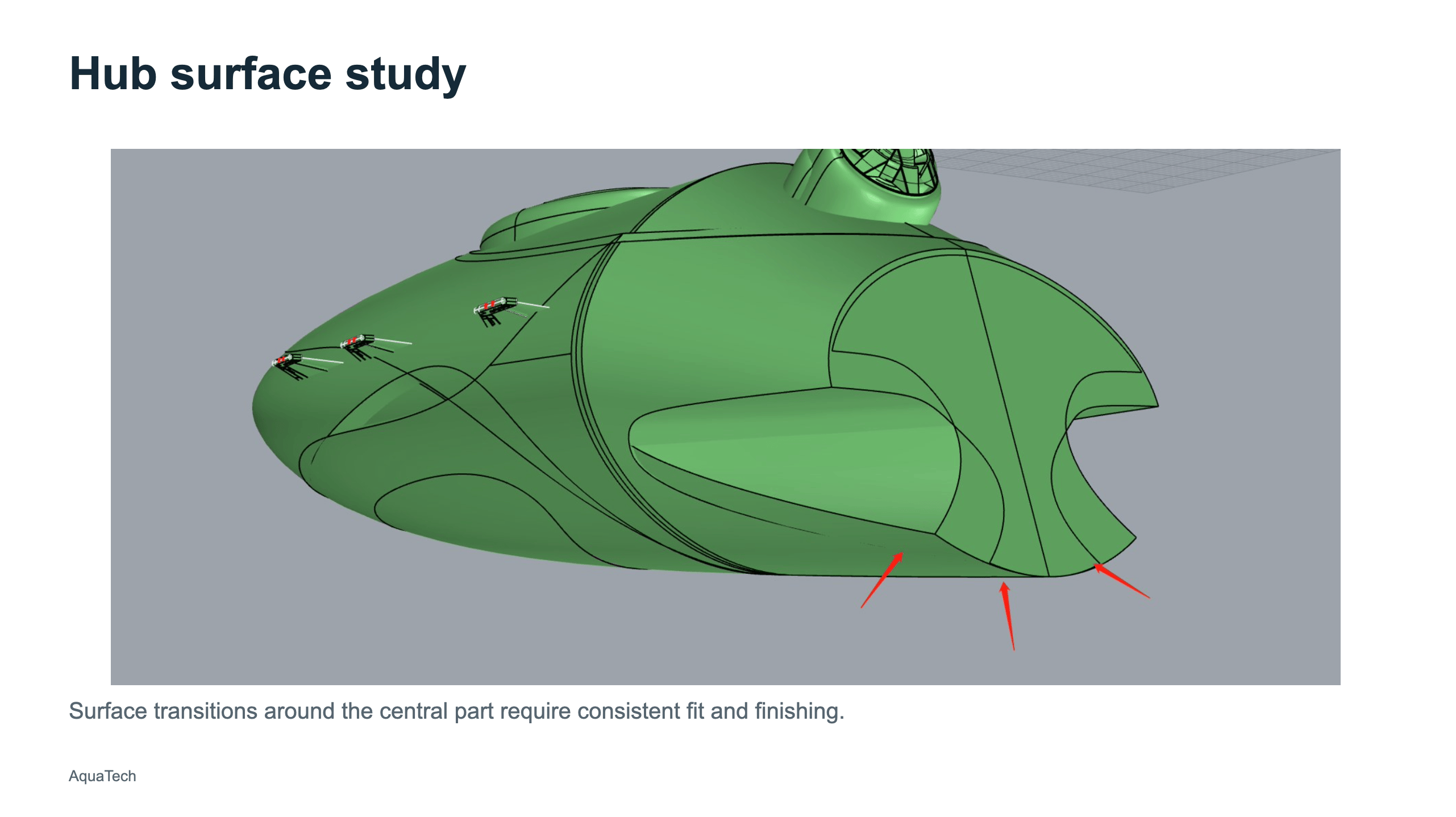
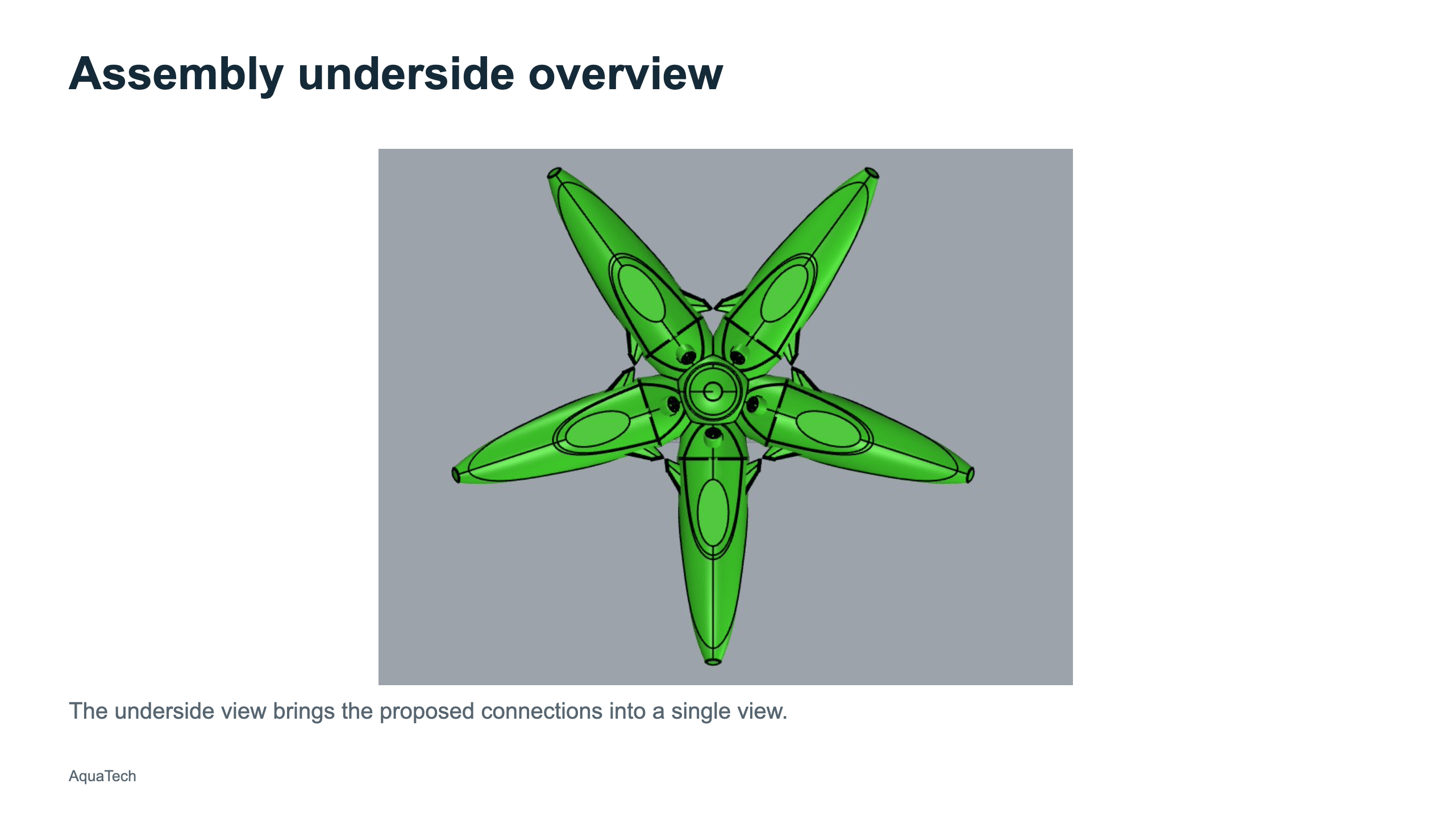
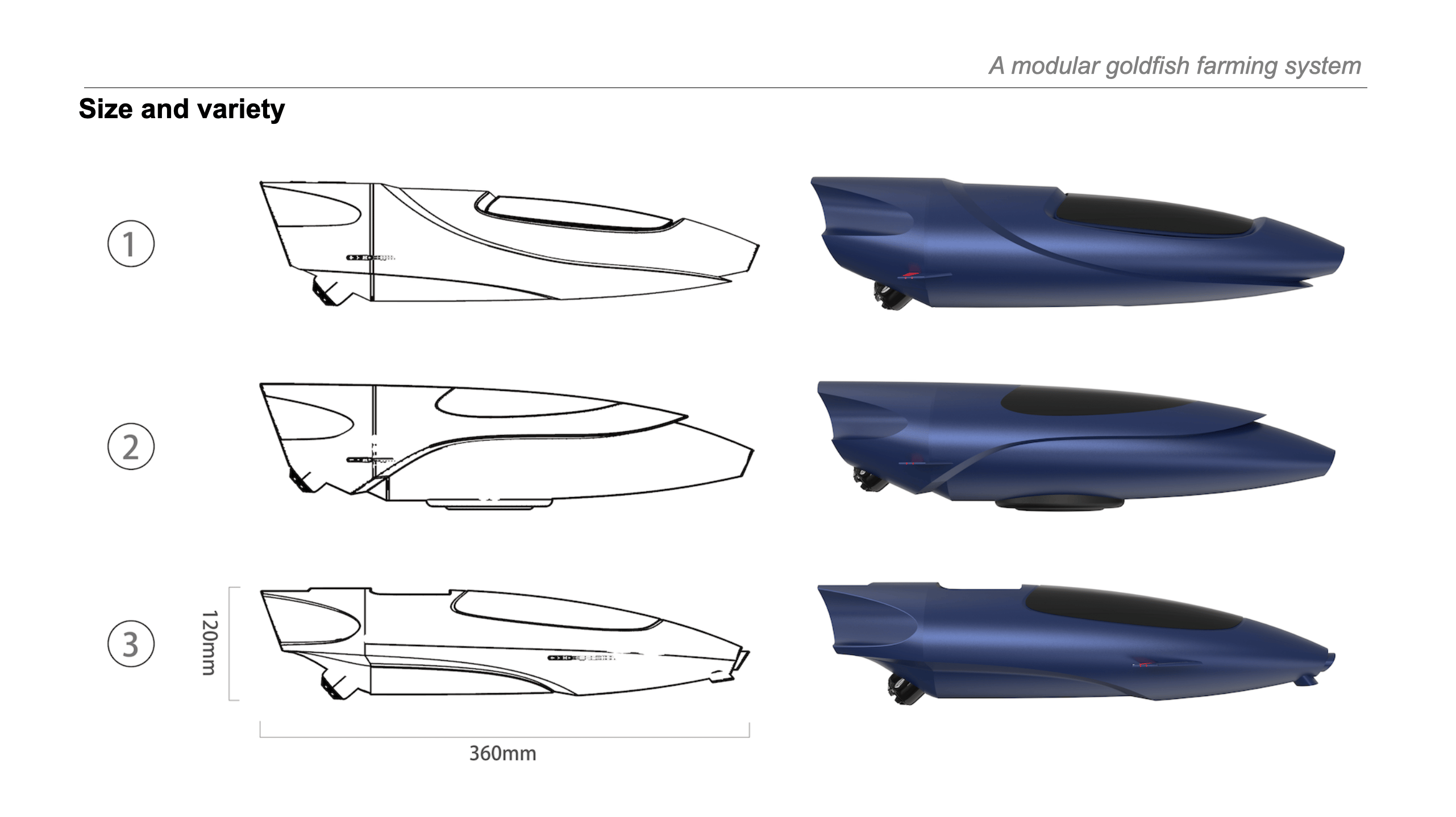
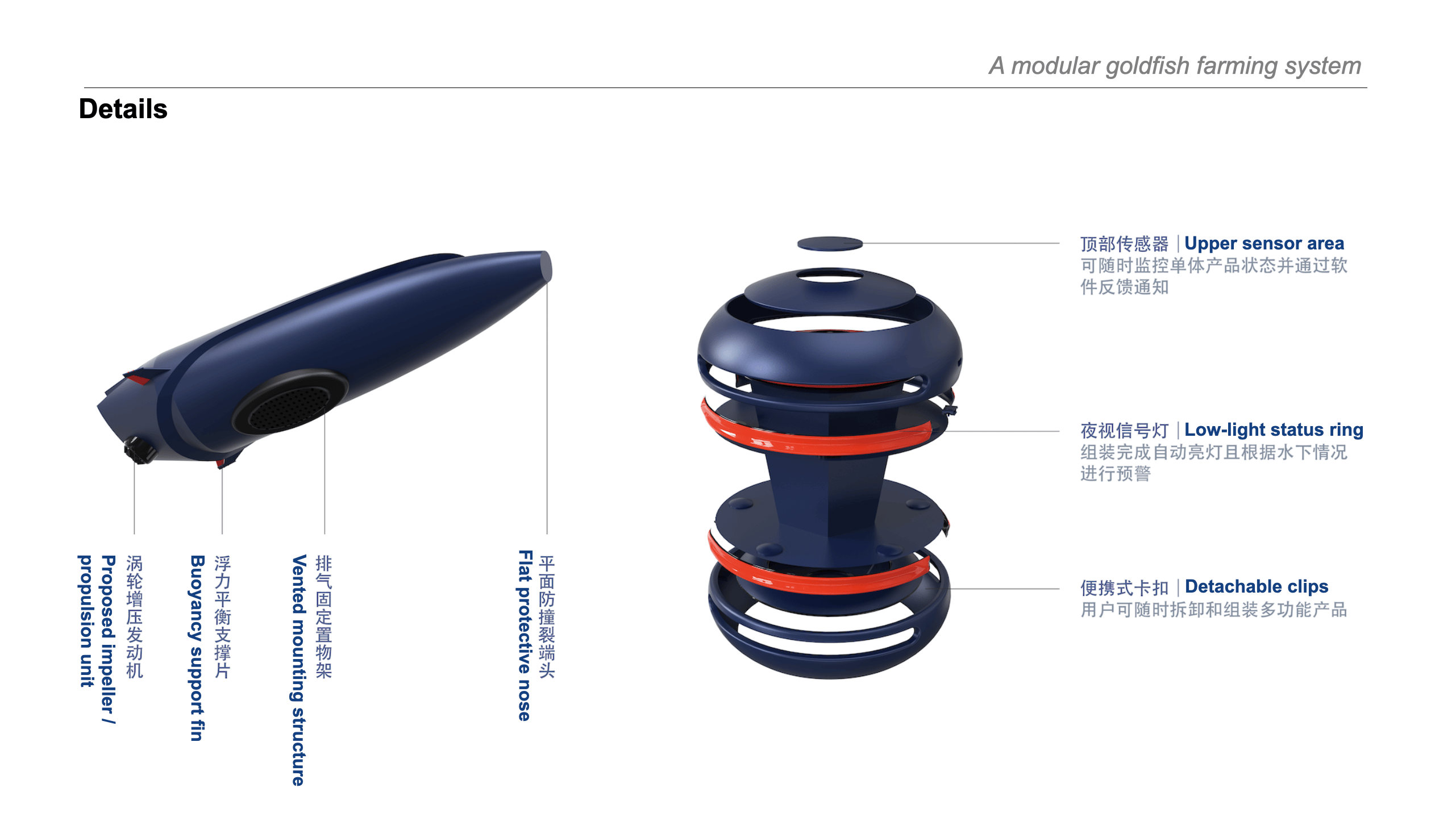
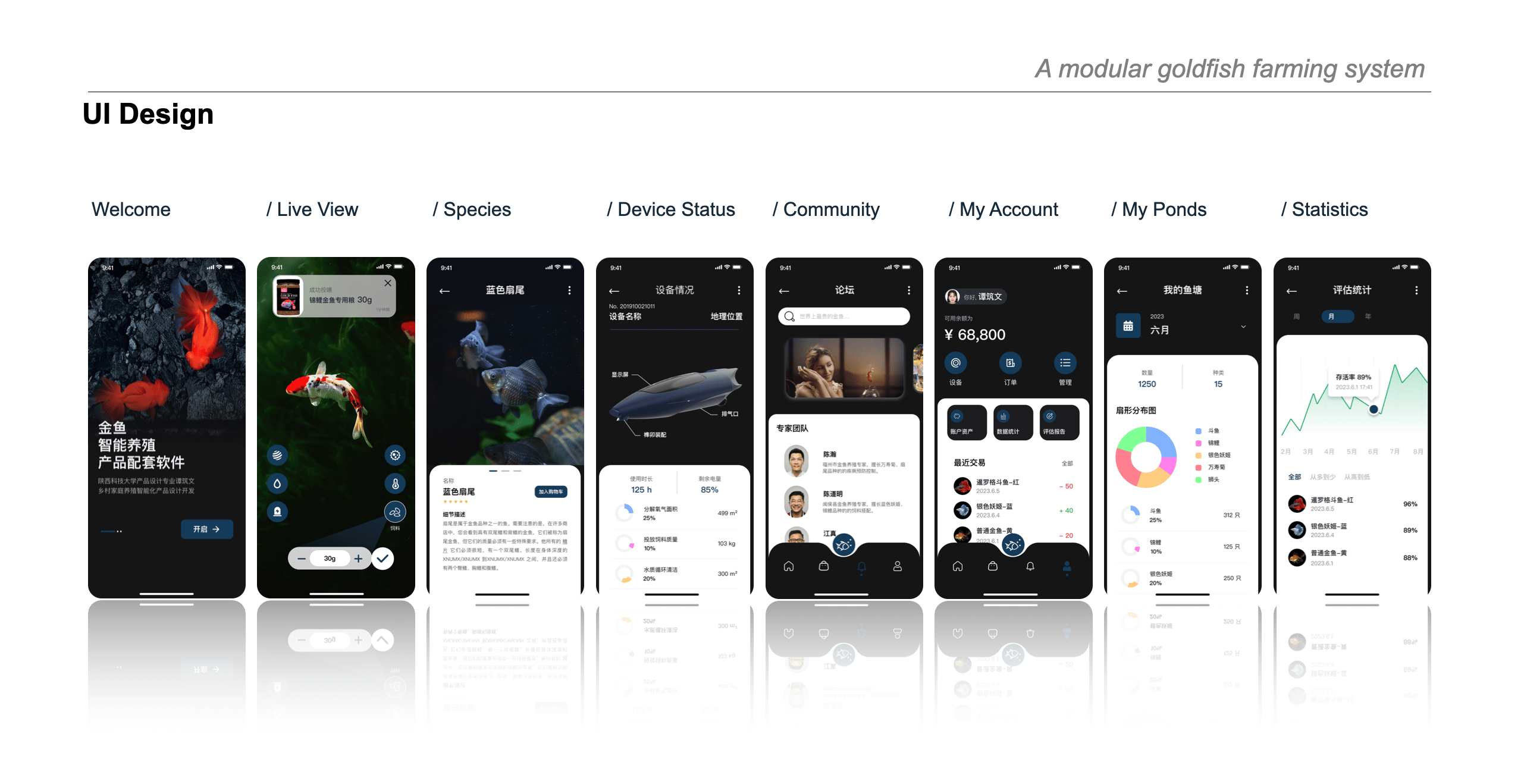
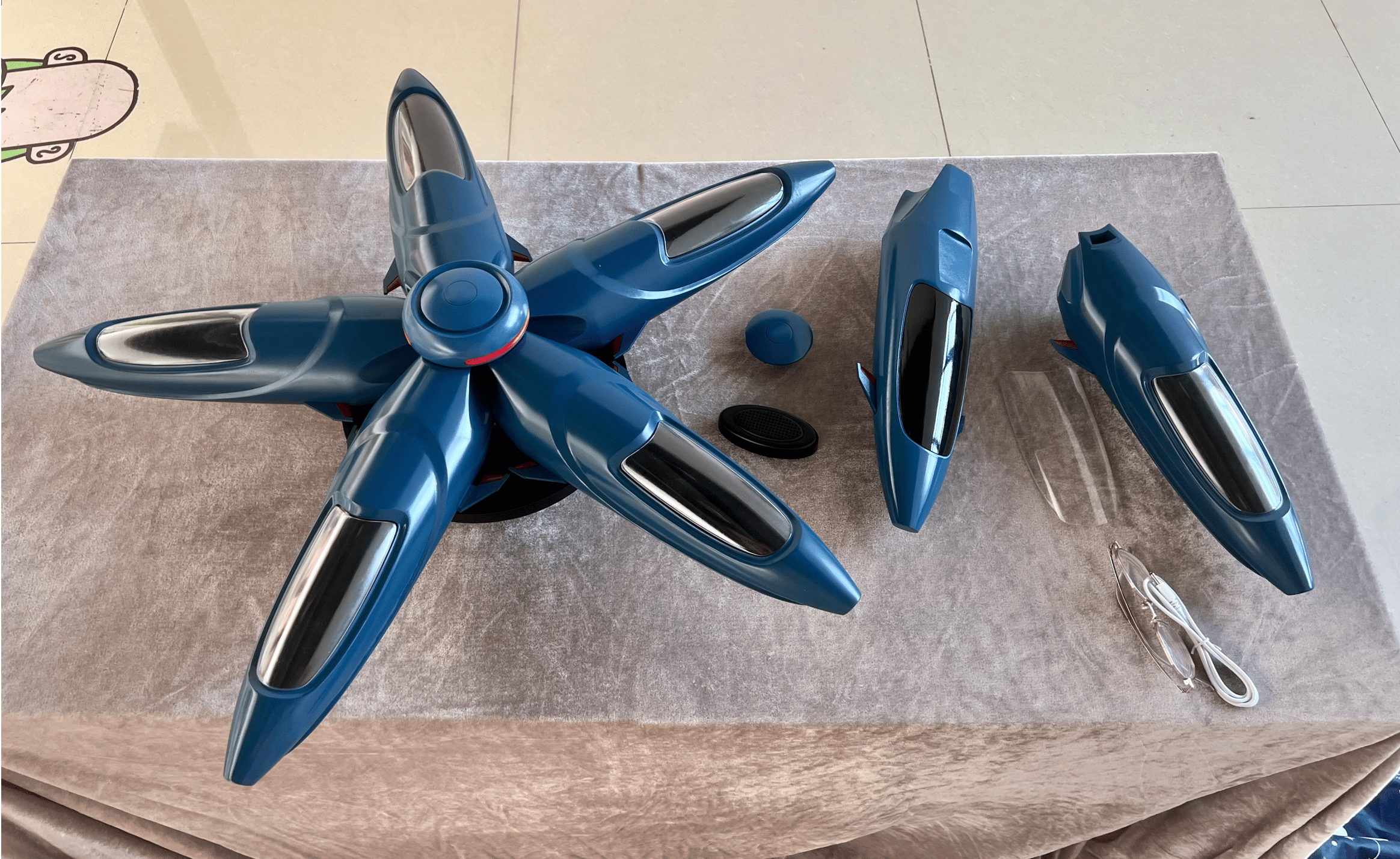
The hardware concept combines fish-inspired individual modules with a starfish-inspired radial assembly. Its modular approach explores how connected units could accommodate different care functions while maintaining a coherent form. The companion app brings pond information, device status, feeding controls and learning resources into a shared digital experience.

​

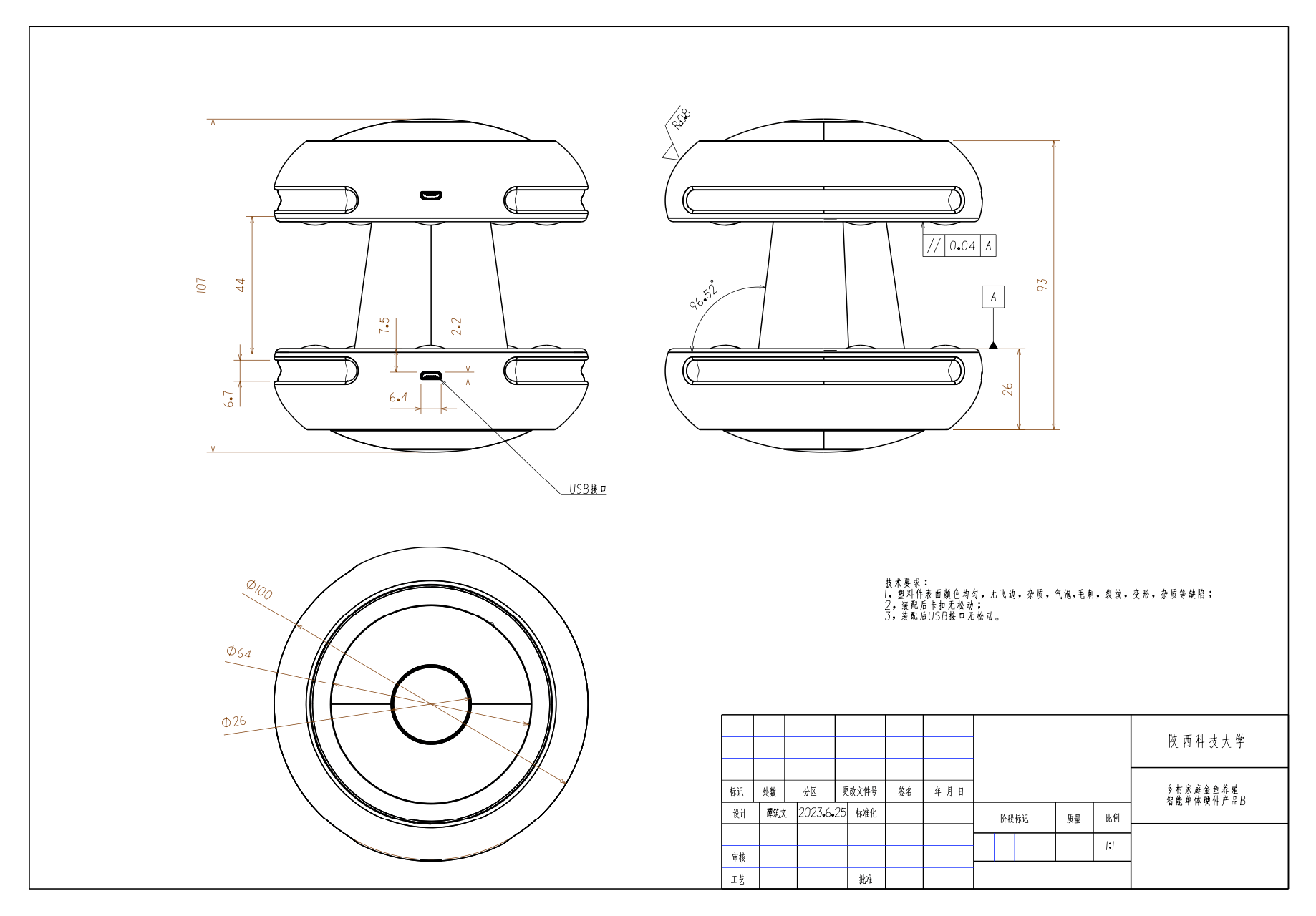
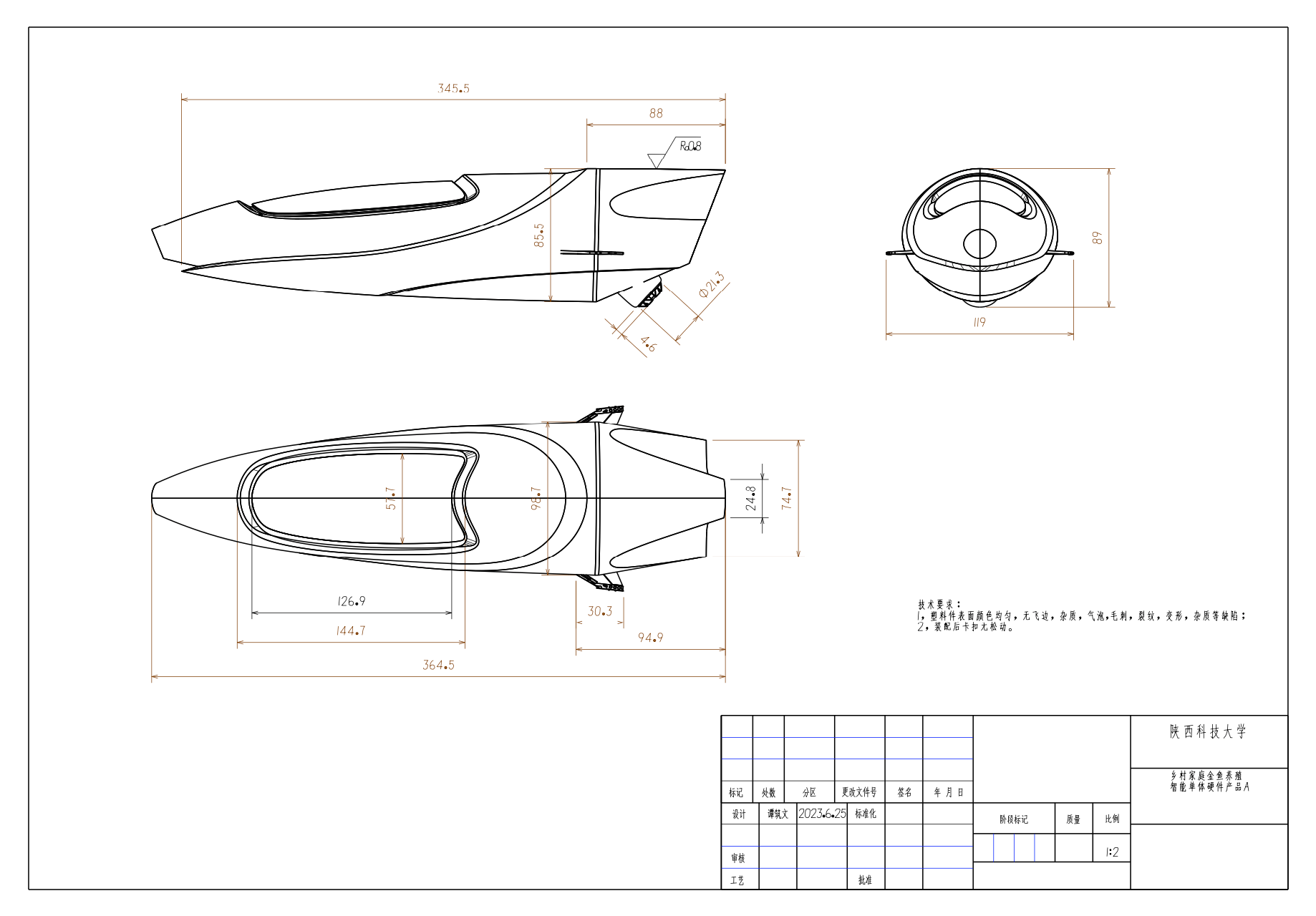
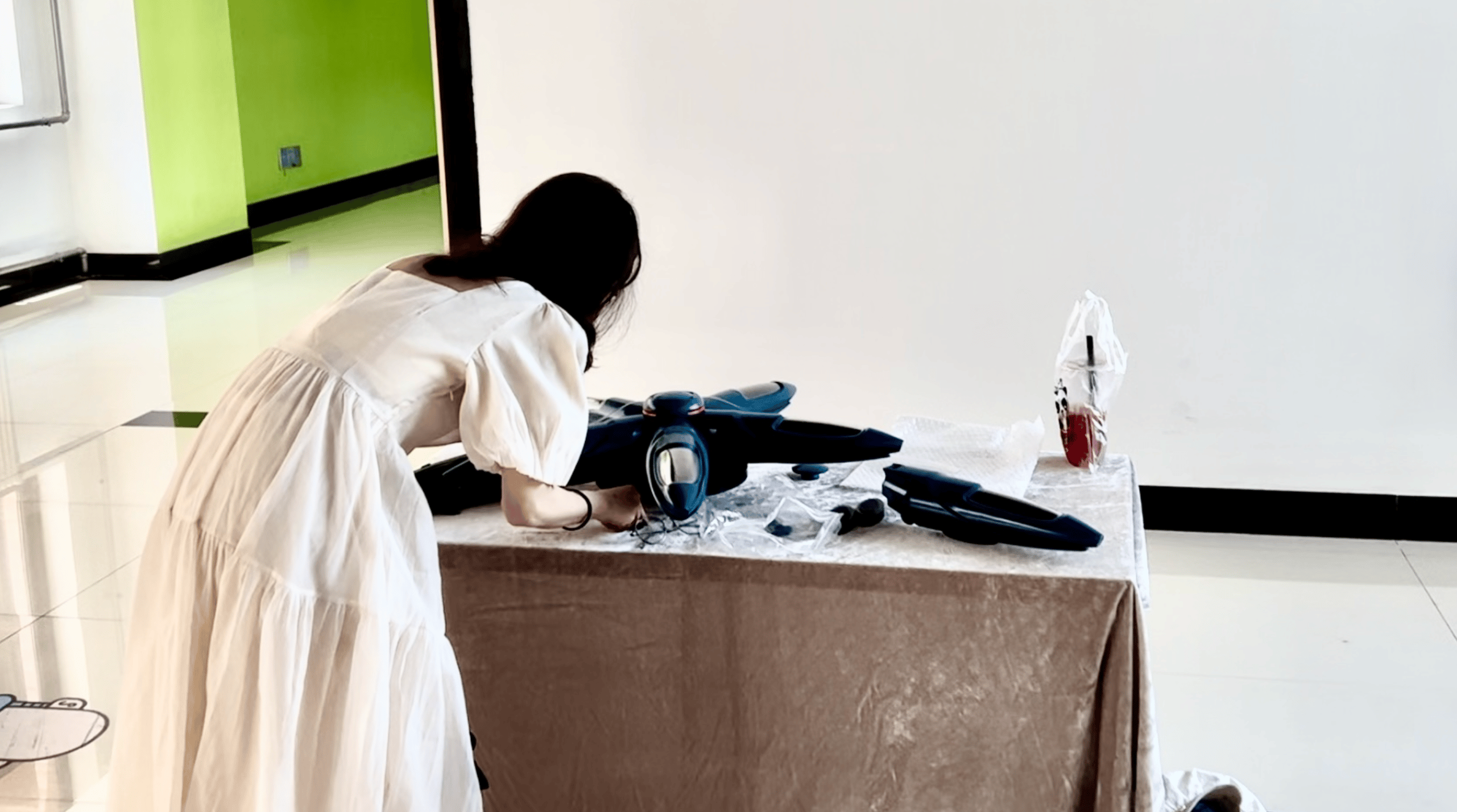
The project produced 3D models, structural studies, product renderings, interface concepts and a painted resin display model. Together, these outcomes communicate a proposed system for connected pond care. Functional performance, usability and benefits to growers remain to be validated.
My project hero

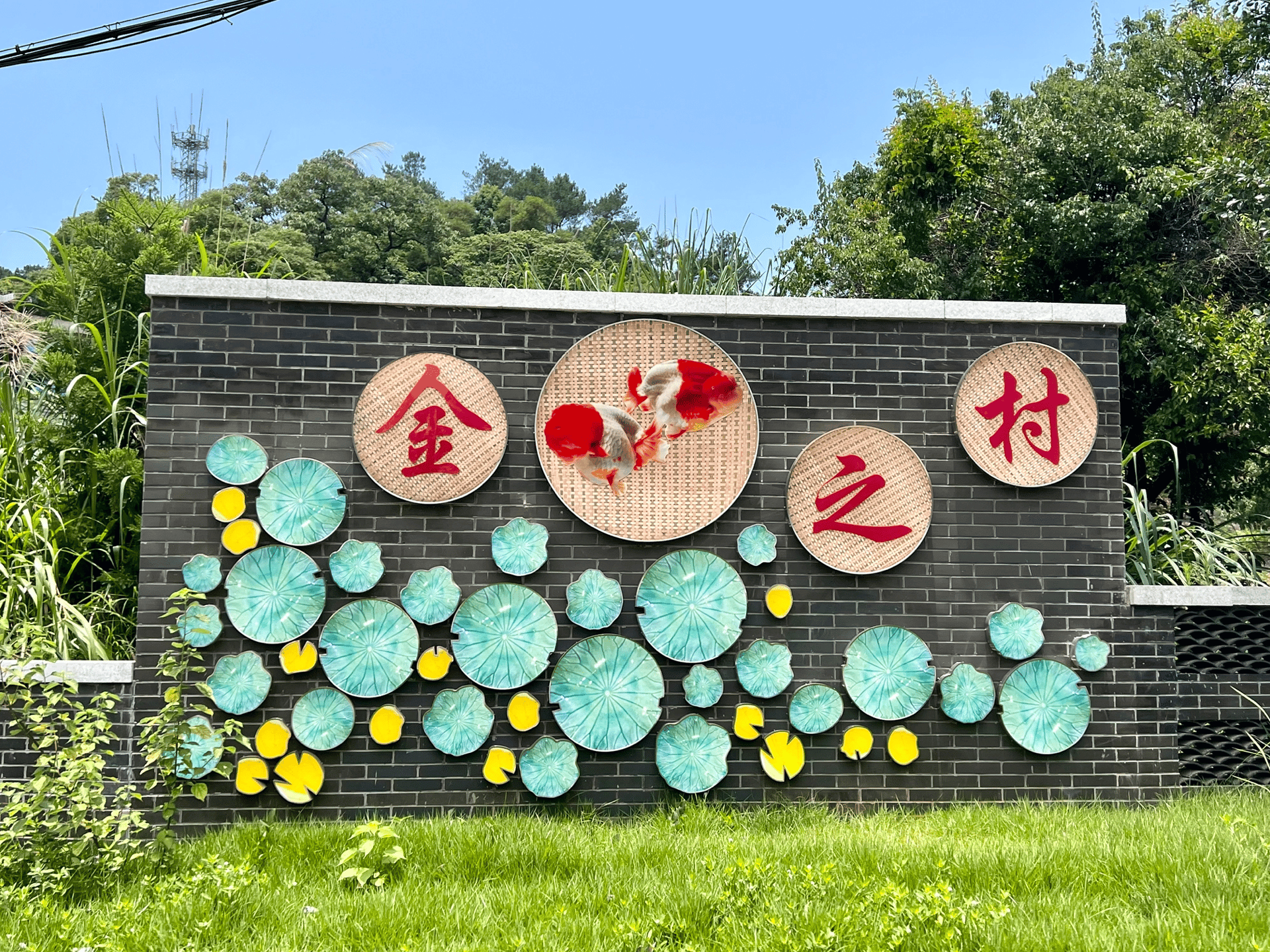
Local identity

The sign reads “Goldfish Village”, placing the project within a recognizable local farming context.

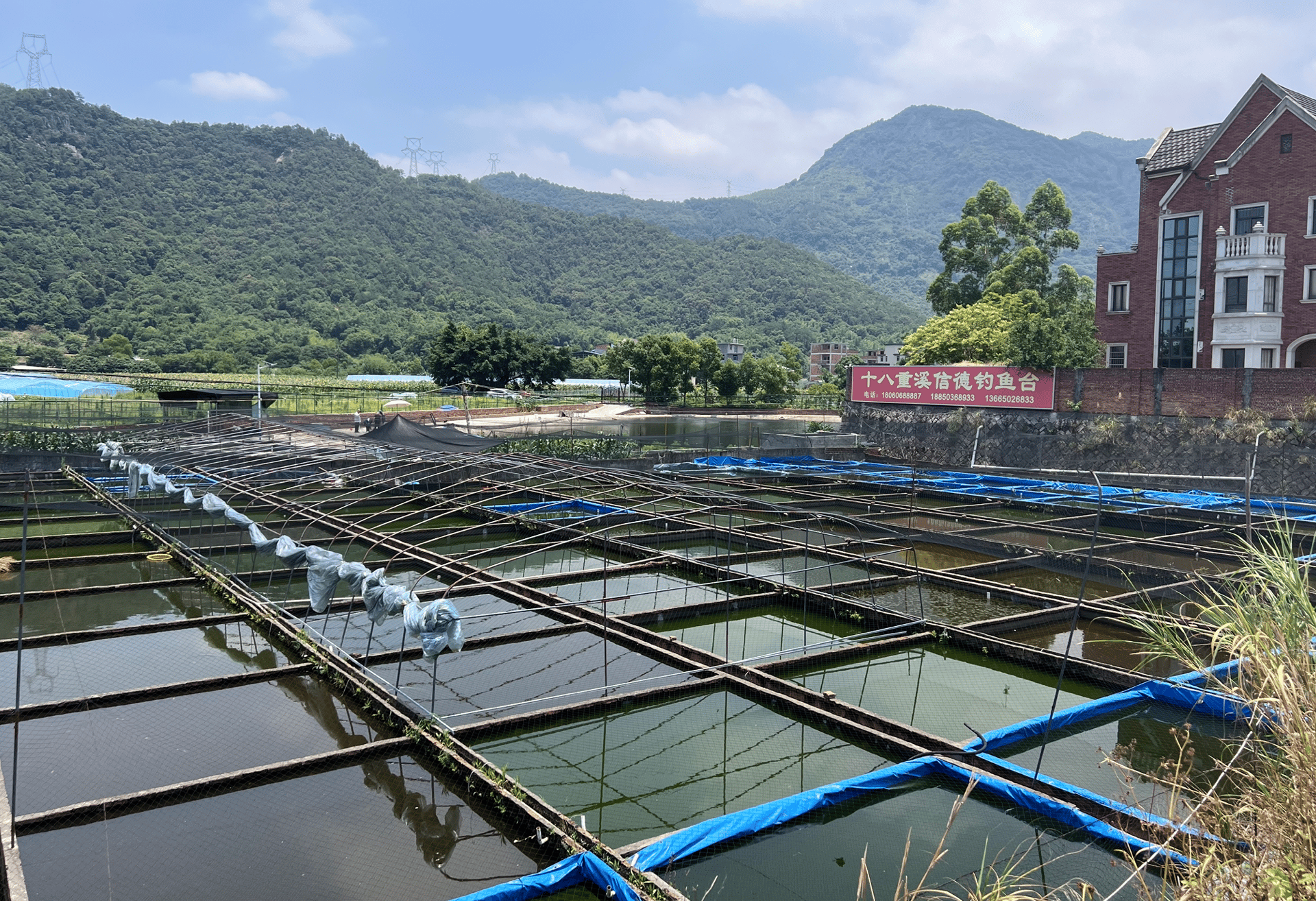
  • Environment and layout

    The site documentation shows repeated pond units and shared access routes.

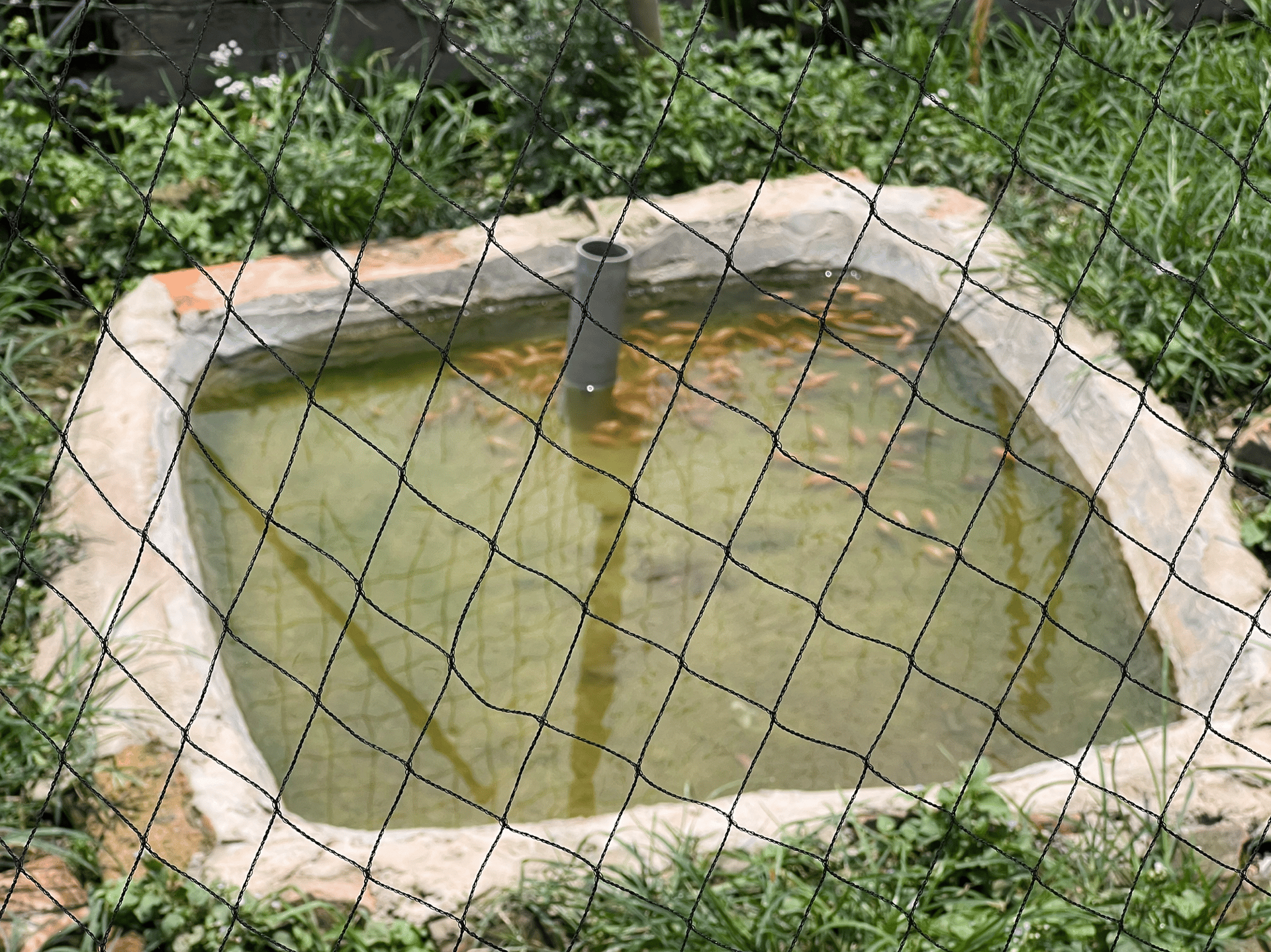
  • Pond setting

    Netting, edges and working areas shape how product may be handled. Variation in household farming scale.

  • Materials and daily upkeep

    Stored bags and supplies make refilling, storage and cleaning relevant design considerations.

Research: local residents

  • Context and needs

    Profile: The original exercise focuses on adults aged 40–60 who live locally or have returned from cities. It describes stable but limited income and household responsibilities.

    ​

    Needs: Supplementary income, practical guidance, simple equipment and access to community support.

  • Barriers and responses

    Limited technology literacy; difficulty finding precise care guidance; income highly rely on personal experience.

    ​

    High costs and uncertain returns suggest transparent operating costs and cautious claims. The broader gap includes market information and sales channels.

  • Design implication

    Support handling, observation, cleaning and refilling. Consider the whole care routine rather than the device alone.

    ​

    Provide clear instructions, accessible controls and reliable maintenance routines. Treat age, gender and family assumptions as hypotheses to test.

Biomimicry

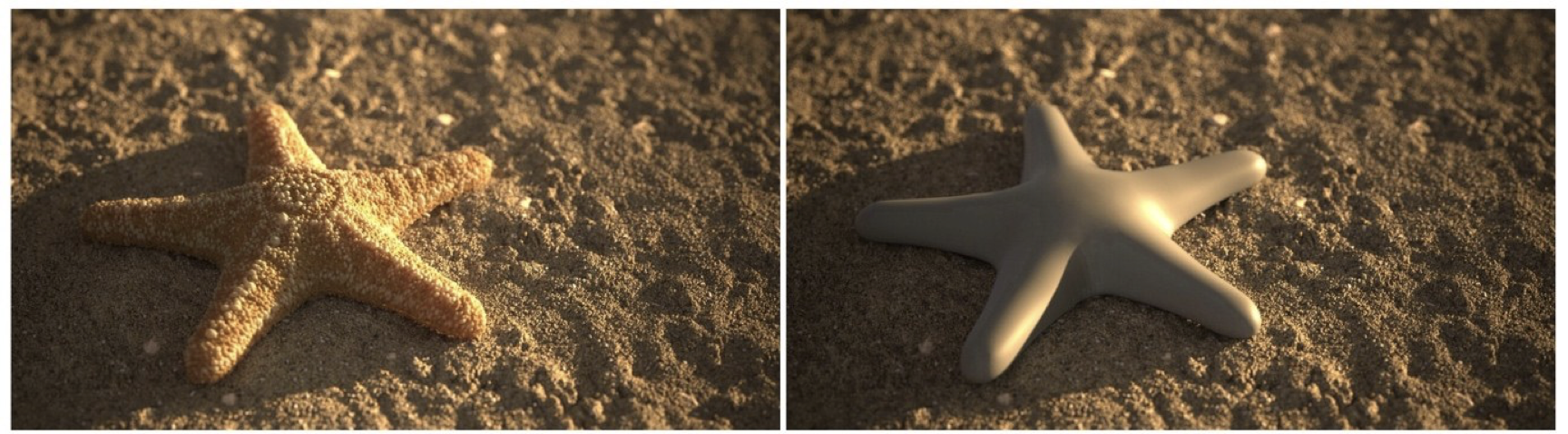
The starfish provides the visual reference for a radial arrangement of connected modules.

A starfish on the beach

Biomimicry

The starfish provides the visual reference for a radial arrangement of connected modules.

Biomimicry

This project helped me connect industrial design with service design. Working across the physical product and its app encouraged me to consider not only what the device looks like, but also how growers would understand its information, maintain its components and incorporate it into daily routines.

​

One strength of the project is the relationship between biomimicry and modularity. Biological references informed both the individual unit and the assembled system, giving the concept a consistent visual identity. Developing the physical model also helped me examine connections, proportions and assembly more closely than renderings alone could.

​

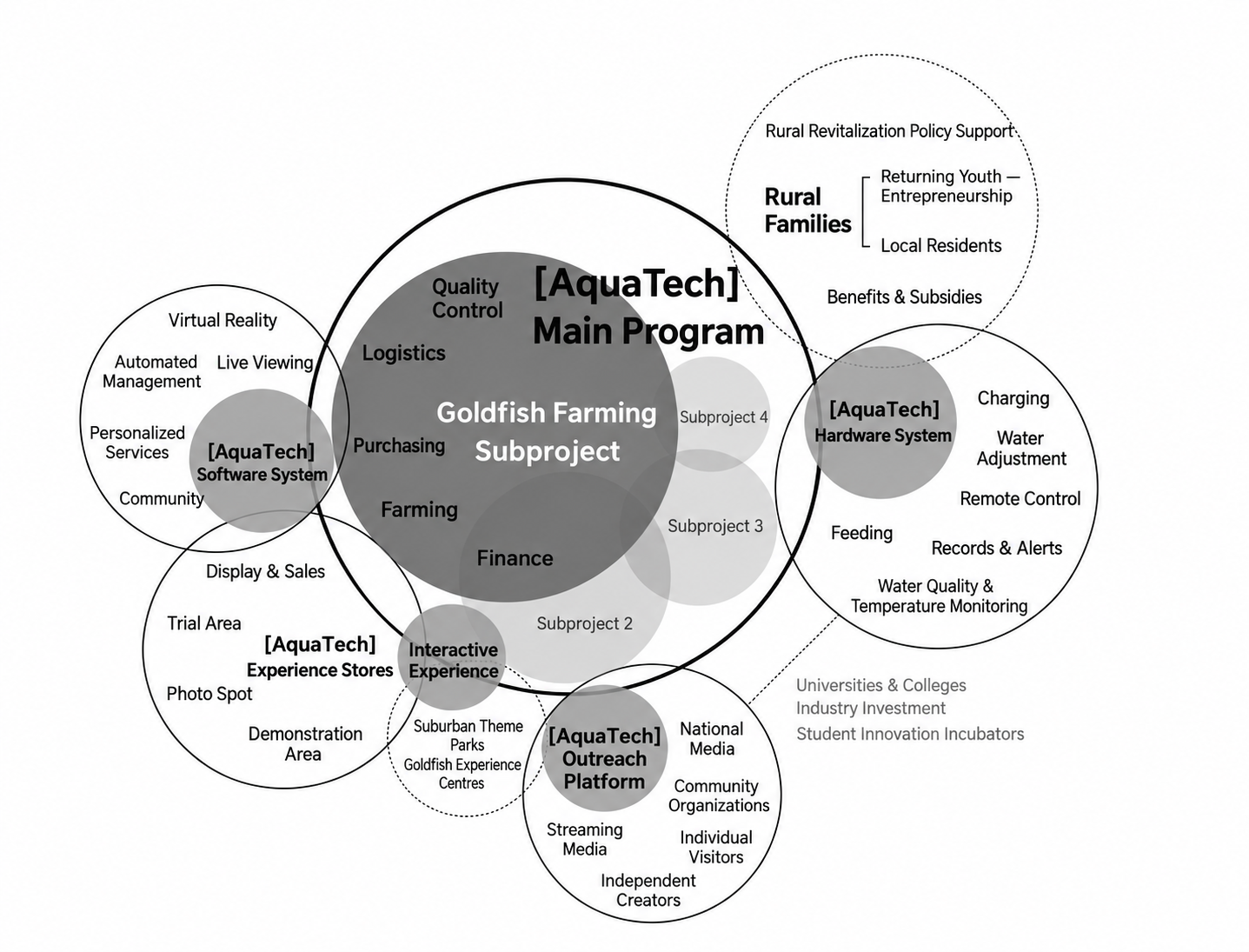
Looking back, I would place greater emphasis on research depth, feature prioritization and product testing. The exploratory questionnaire and personas provided an initial direction, but they were insufficient to establish the needs of a broader farming population. The concept also expanded into monitoring, automation, community, commerce and immersive experiences before its essential care tasks had been tested.

​

My main learning is that a convincing design concept needs an equally clear plan for validation. A display model can communicate form and assembly, but it cannot demonstrate sensor accuracy, waterproofing or reduced maintenance effort. In a further iteration, I would treat cleaning, refilling, repair and understandable feedback as central design requirements from the outset.

Biomimicry

Future Exploration

​

**Adaptable, repairable hardware.** Explore configurations for different pond layouts and care needs, with replaceable components and accessible maintenance points. Investigate whether modularity can reduce repair effort and material waste rather than simply adding complexity.

​

**Accessible and resilient interaction.** Develop clearer units, timestamps, sensor-status indicators and recovery instructions. Explore readable interfaces, shared family access and useful behaviour when connectivity is unreliable.

​

**Trusted learning and community support.** Investigate how growers could exchange experience and access qualified advice, with clear distinctions between peer suggestions, expert guidance and automated notifications.

​

**A wider service experience.** Consider onboarding, local maintenance support and transparent ownership costs. Consumer-facing experiences, educational visits and AR or VR could become later explorations if research demonstrates a clear purpose beyond the core farming workflow.

​

These directions extend the original concept; they are proposals for future development, not completed or validated project outcomes.

Spring 2023

AquaTech

Smart Goldfish

AquaTech is my bachelor’s graduation design project, exploring how modular hardware and a companion app could support daily care on family-run goldfish farms in my hometown Fuzhou, one of the biggest goldfish cities in China. The project brings together local site observations, exploratory research, product development and interface design (app icons are from Figma Template) to address routine monitoring, feeding and access to care information.

​

The hardware concept combines fish-inspired individual modules with a starfish-inspired radial assembly. Its modular approach explores how connected units could accommodate different care functions while maintaining a coherent form. The companion app brings pond information, device status, feeding controls and learning resources into a shared digital experience.

​

The project produced 3D models, structural studies, product renderings, interface concepts and a painted resin display model. Together, these outcomes communicate a proposed system for connected pond care. Functional performance, usability and benefits to growers remain to be validated.
My project hero

Local identity

The sign reads “Goldfish Village”, placing the project within a recognizable local farming context.

  • Environment and layout

    The site documentation shows repeated pond units and shared access routes.

  • Pond setting

    Netting, edges and working areas shape how product may be handled. Variation in household farming scale.

  • Materials and daily upkeep

    Stored bags and supplies make refilling, storage and cleaning relevant design considerations.

Research: local residents

  • Context and needs

    Profile: The original exercise focuses on adults aged 40–60 who live locally or have returned from cities. It describes stable but limited income and household responsibilities.

    ​

    Needs: Supplementary income, practical guidance, simple equipment and access to community support.

  • Barriers and responses

    Limited technology literacy; difficulty finding precise care guidance; income highly rely on personal experience.

    ​

    High costs and uncertain returns suggest transparent operating costs and cautious claims. The broader gap includes market information and sales channels.

  • Design implication

    Support handling, observation, cleaning and refilling. Consider the whole care routine rather than the device alone.

    ​

    Provide clear instructions, accessible controls and reliable maintenance routines. Treat age, gender and family assumptions as hypotheses to test.

Biomimicry

The starfish provides the visual reference for a radial arrangement of connected modules.

A starfish on the beach

Biomimicry

The starfish provides the visual reference for a radial arrangement of connected modules.

Biomimicry

This project helped me connect industrial design with service design. Working across the physical product and its app encouraged me to consider not only what the device looks like, but also how growers would understand its information, maintain its components and incorporate it into daily routines.

​

One strength of the project is the relationship between biomimicry and modularity. Biological references informed both the individual unit and the assembled system, giving the concept a consistent visual identity. Developing the physical model also helped me examine connections, proportions and assembly more closely than renderings alone could.

​

Looking back, I would place greater emphasis on research depth, feature prioritization and product testing. The exploratory questionnaire and personas provided an initial direction, but they were insufficient to establish the needs of a broader farming population. The concept also expanded into monitoring, automation, community, commerce and immersive experiences before its essential care tasks had been tested.

​

My main learning is that a convincing design concept needs an equally clear plan for validation. A display model can communicate form and assembly, but it cannot demonstrate sensor accuracy, waterproofing or reduced maintenance effort. In a further iteration, I would treat cleaning, refilling, repair and understandable feedback as central design requirements from the outset.

Biomimicry

Future Exploration

​

**Adaptable, repairable hardware.** Explore configurations for different pond layouts and care needs, with replaceable components and accessible maintenance points. Investigate whether modularity can reduce repair effort and material waste rather than simply adding complexity.

​

**Accessible and resilient interaction.** Develop clearer units, timestamps, sensor-status indicators and recovery instructions. Explore readable interfaces, shared family access and useful behaviour when connectivity is unreliable.

​

**Trusted learning and community support.** Investigate how growers could exchange experience and access qualified advice, with clear distinctions between peer suggestions, expert guidance and automated notifications.

​

**A wider service experience.** Consider onboarding, local maintenance support and transparent ownership costs. Consumer-facing experiences, educational visits and AR or VR could become later explorations if research demonstrates a clear purpose beyond the core farming workflow.

​

These directions extend the original concept; they are proposals for future development, not completed or validated project outcomes.

Spring 2023

AquaTech

Smart Goldfish

AquaTech is my bachelor’s graduation design project, exploring how modular hardware and a companion app could support daily care on family-run goldfish farms in my hometown Fuzhou, one of the biggest goldfish cities in China. The project brings together local site observations, exploratory research, product development and interface design (app icons are from Figma Template) to address routine monitoring, feeding and access to care information.

​

The hardware concept combines fish-inspired individual modules with a starfish-inspired radial assembly. Its modular approach explores how connected units could accommodate different care functions while maintaining a coherent form. The companion app brings pond information, device status, feeding controls and learning resources into a shared digital experience.

​

The project produced 3D models, structural studies, product renderings, interface concepts and a painted resin display model. Together, these outcomes communicate a proposed system for connected pond care. Functional performance, usability and benefits to growers remain to be validated.
My project hero

Local identity

The sign reads “Goldfish Village”, placing the project within a recognizable local farming context.

  • Environment and layout

    The site documentation shows repeated pond units and shared access routes.

  • Pond setting

    Netting, edges and working areas shape how product may be handled. Variation in household farming scale.

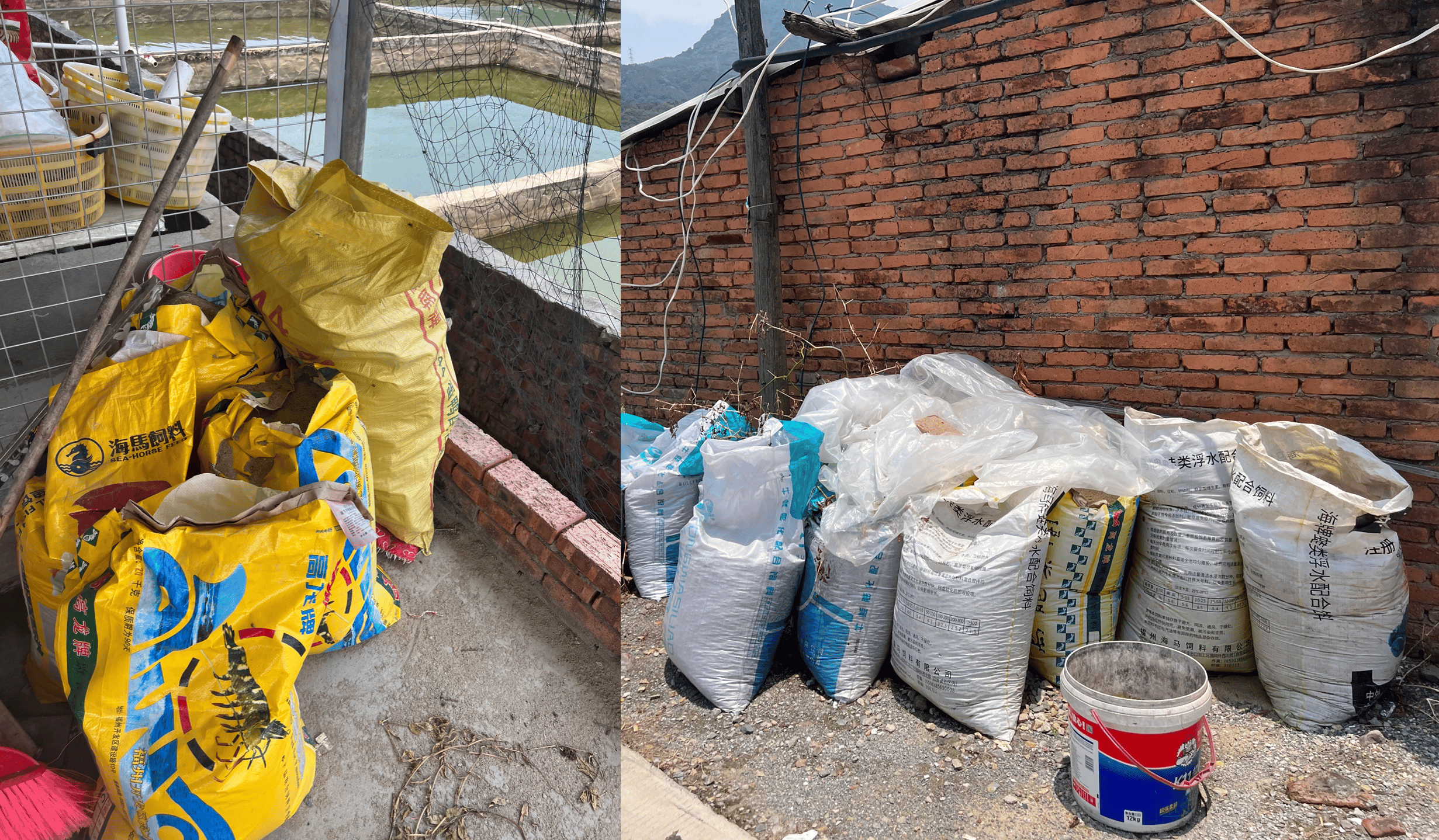
  • Materials and daily upkeep

    Stored bags and supplies make refilling, storage and cleaning relevant design considerations.

Research: local residents

  • Context and needs

    Profile: The original exercise focuses on adults aged 40–60 who live locally or have returned from cities. It describes stable but limited income and household responsibilities.

    ​

    Needs: Supplementary income, practical guidance, simple equipment and access to community support.

  • Barriers and responses

    Limited technology literacy; difficulty finding precise care guidance; income highly rely on personal experience.

    ​

    High costs and uncertain returns suggest transparent operating costs and cautious claims. The broader gap includes market information and sales channels.

  • Design implication

    Support handling, observation, cleaning and refilling. Consider the whole care routine rather than the device alone.

    ​

    Provide clear instructions, accessible controls and reliable maintenance routines. Treat age, gender and family assumptions as hypotheses to test.

Biomimicry Appearance

The starfish provides the visual reference for a radial arrangement of connected modules.

A starfish on the beach

Modelling Process

The starfish provides the visual reference for a radial arrangement of connected modules.

Reflection

This project helped me connect industrial design with service design. Working across the physical product and its app encouraged me to consider not only what the device looks like, but also how growers would understand its information, maintain its components and incorporate it into daily routines.

​

One strength of the project is the relationship between biomimicry and modularity. Biological references informed both the individual unit and the assembled system, giving the concept a consistent visual identity. Developing the physical model also helped me examine connections, proportions and assembly more closely than renderings alone could.

​

Looking back, I would place greater emphasis on research depth, feature prioritization and product testing. The exploratory questionnaire and personas provided an initial direction, but they were insufficient to establish the needs of a broader farming population. The concept also expanded into monitoring, automation, community, commerce and immersive experiences before its essential care tasks had been tested.

​

My main learning is that a convincing design concept needs an equally clear plan for validation. A display model can communicate form and assembly, but it cannot demonstrate sensor accuracy, waterproofing or reduced maintenance effort. In a further iteration, I would treat cleaning, refilling, repair and understandable feedback as central design requirements from the outset.

Future Exploration Proposal

Adaptable, repairable hardware.

Explore configurations for different pond layouts and care needs, with replaceable components and accessible maintenance points. Investigate whether modularity can reduce repair effort and material waste rather than simply adding complexity.

​

Accessible and resilient interaction.

Develop clearer units, timestamps, sensor-status indicators and recovery instructions. Explore readable interfaces, shared family access and useful behaviour when connectivity is unreliable.

​

Trusted learning and community support.

Investigate how growers could exchange experience and access qualified advice, with clear distinctions between peer suggestions, expert guidance and automated notifications.

​

A wider service experience.

Consider onboarding, local maintenance support and transparent ownership costs. Consumer-facing experiences, educational visits and AR or VR could become later explorations if research demonstrates a clear purpose beyond the core farming workflow.