April 2022

Chop Chop Hanzi

Educational / Learning Toy

An illustrative sketch of a flower

Summary

Chop Chop Hanzi reimagines familiar Chinese characters as objects of play and art. Chosen for the beauty of their meaning, sound and form, these characters find new life in contemporary design.

​

Rooted in Chinese cultural heritage in pictographs, the collection brings warmth and quiet poetry to simple, playful forms made to be enjoyed again and again.

  • Chinese Pictographs
    The world, drawn into words

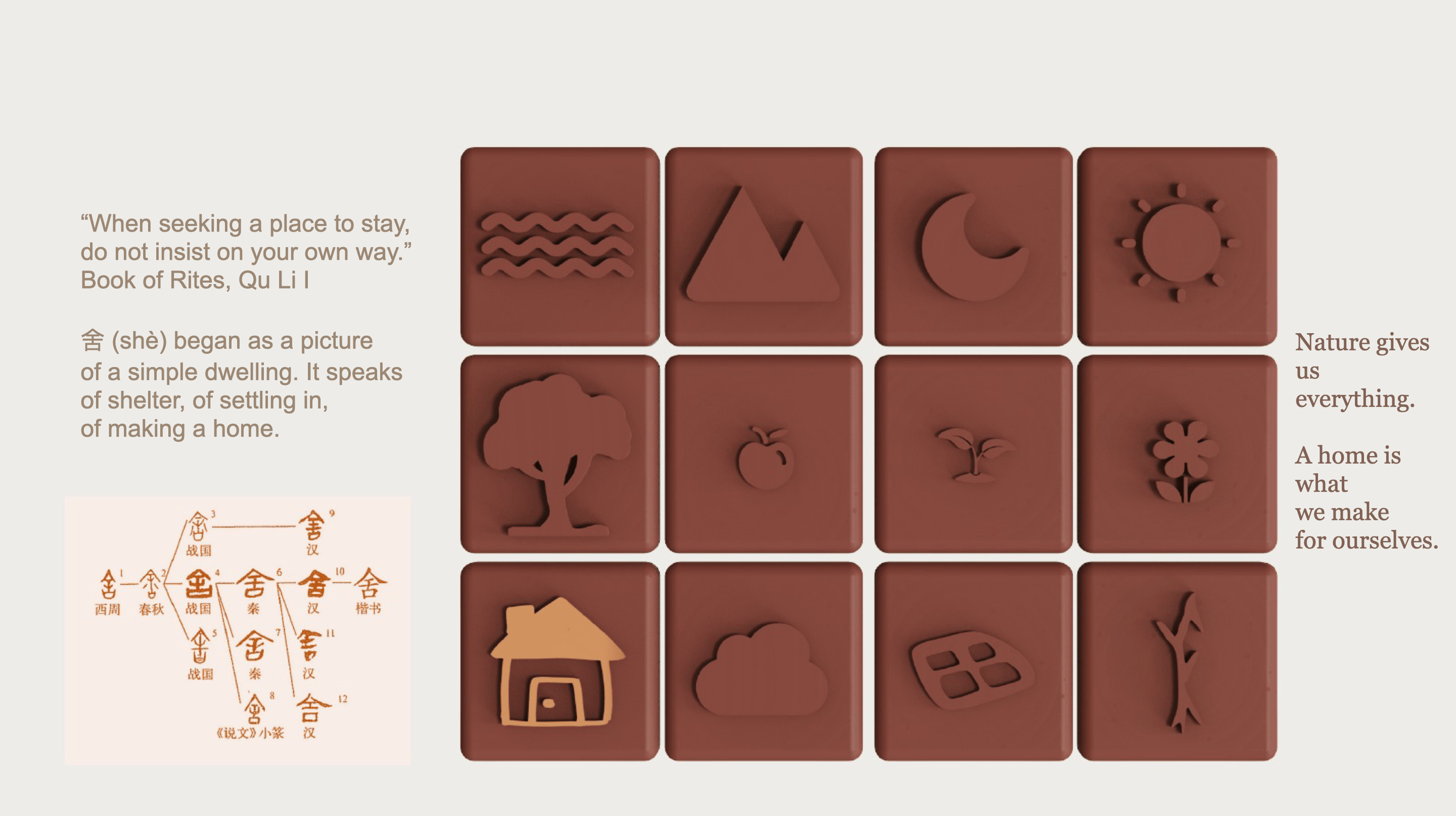
    Some of the earliest Chinese characters began as simple drawings of the world: the sun, the moon, a tree, a mountain. Over time, these images evolved into written forms, carrying traces of nature within their strokes.

    ​

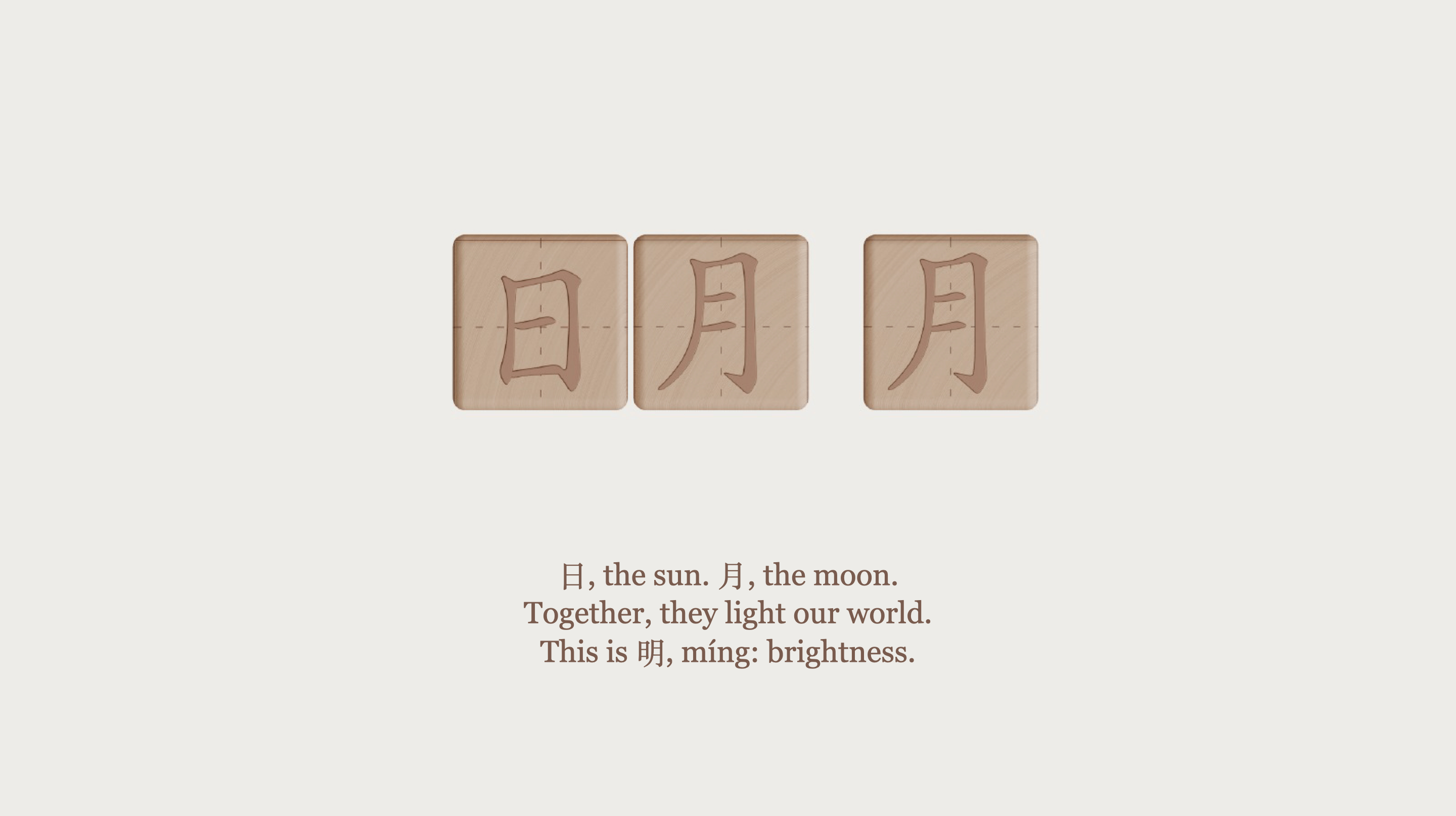
    日 (rì), the sun. 月 (yuè), the moon. 木 (mù), a tree. 山 (shān), a mountain.

    ​

    Pictographs form one of the foundations of Chinese writing. They invite us to see language as both meaning and image, where a few strokes can hold a whole world.

Stamp Building Blocks for Chinese Characters

Movable Type, Reimagined

The idea

Around the 11th century, the artisan Bi Sheng invented movable type in China, and wooden type later became its most influential form. In 2010, UNESCO inscribed China’s wooden movable-type printing on its List of Intangible Cultural Heritage in Need of Urgent Safeguarding. Today only a few craftspeople keep it alive.

We asked a simple question: what if this ancient technology could live on as a toy?

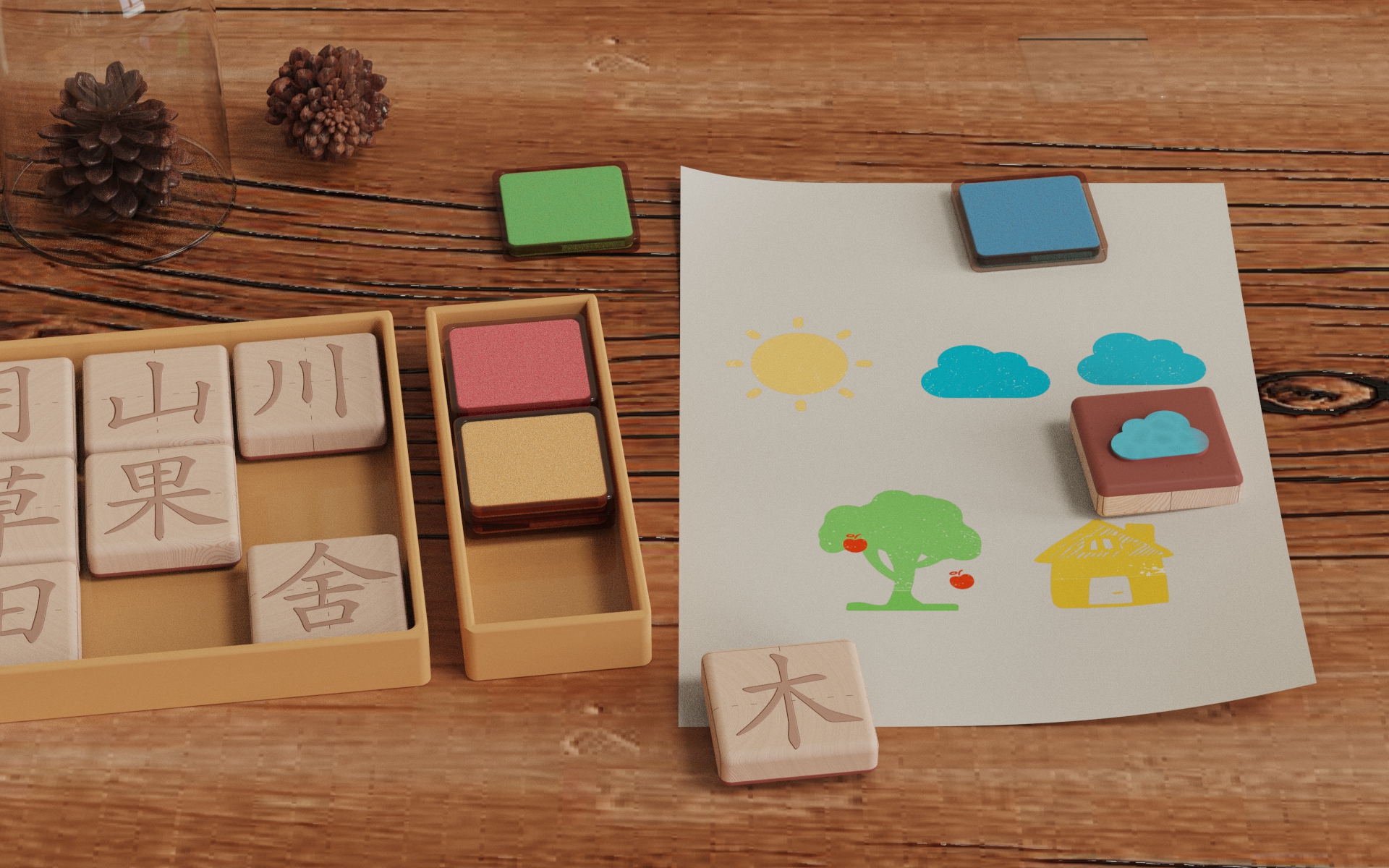
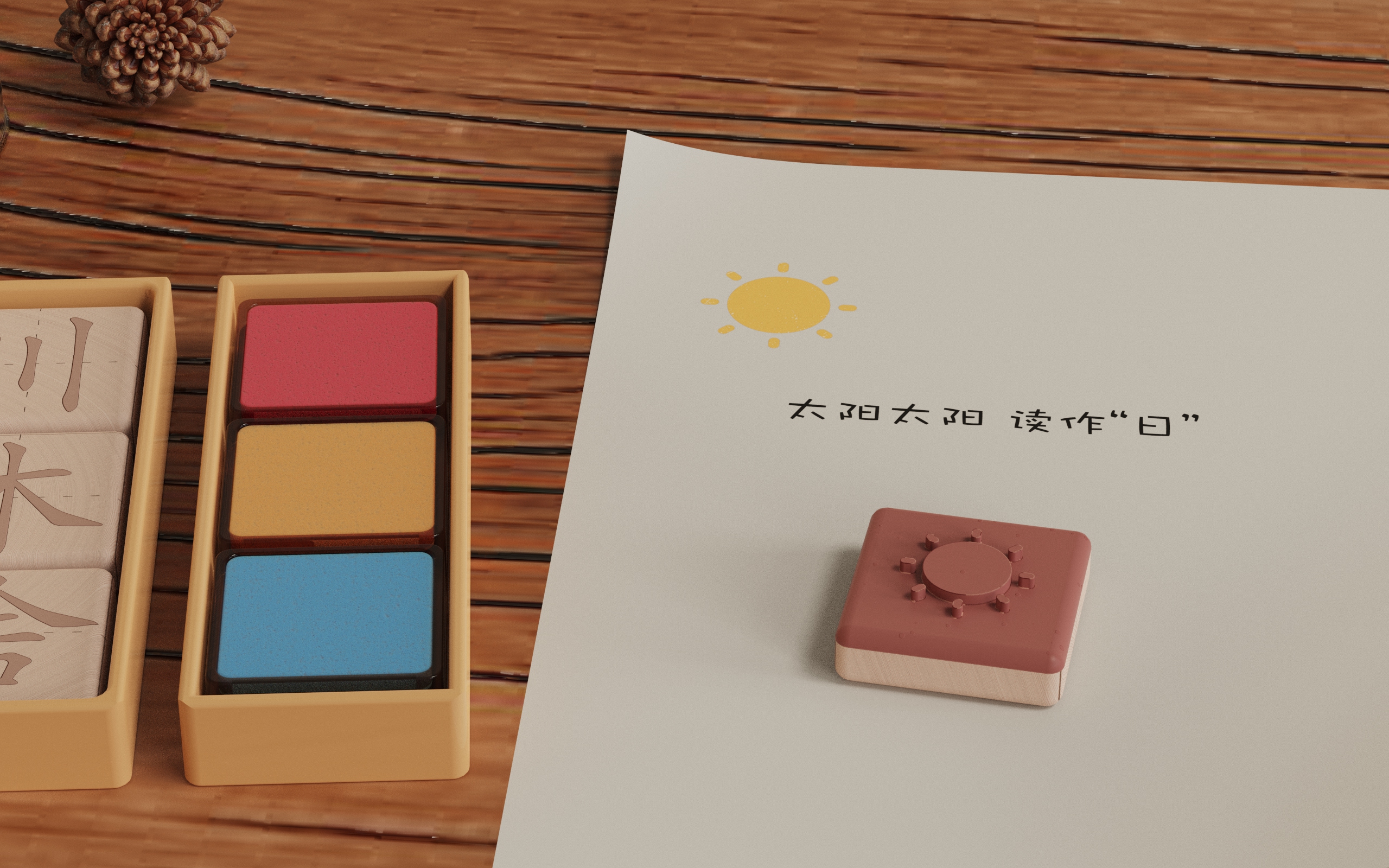
The answer is a set of wooden stamp blocks. Each block carries a Chinese character, raised so a child can feel it, stamp it, and build with it. Children love blocks because they can create and re-create with them. We kept that freedom and added something new.

​

Why characters?

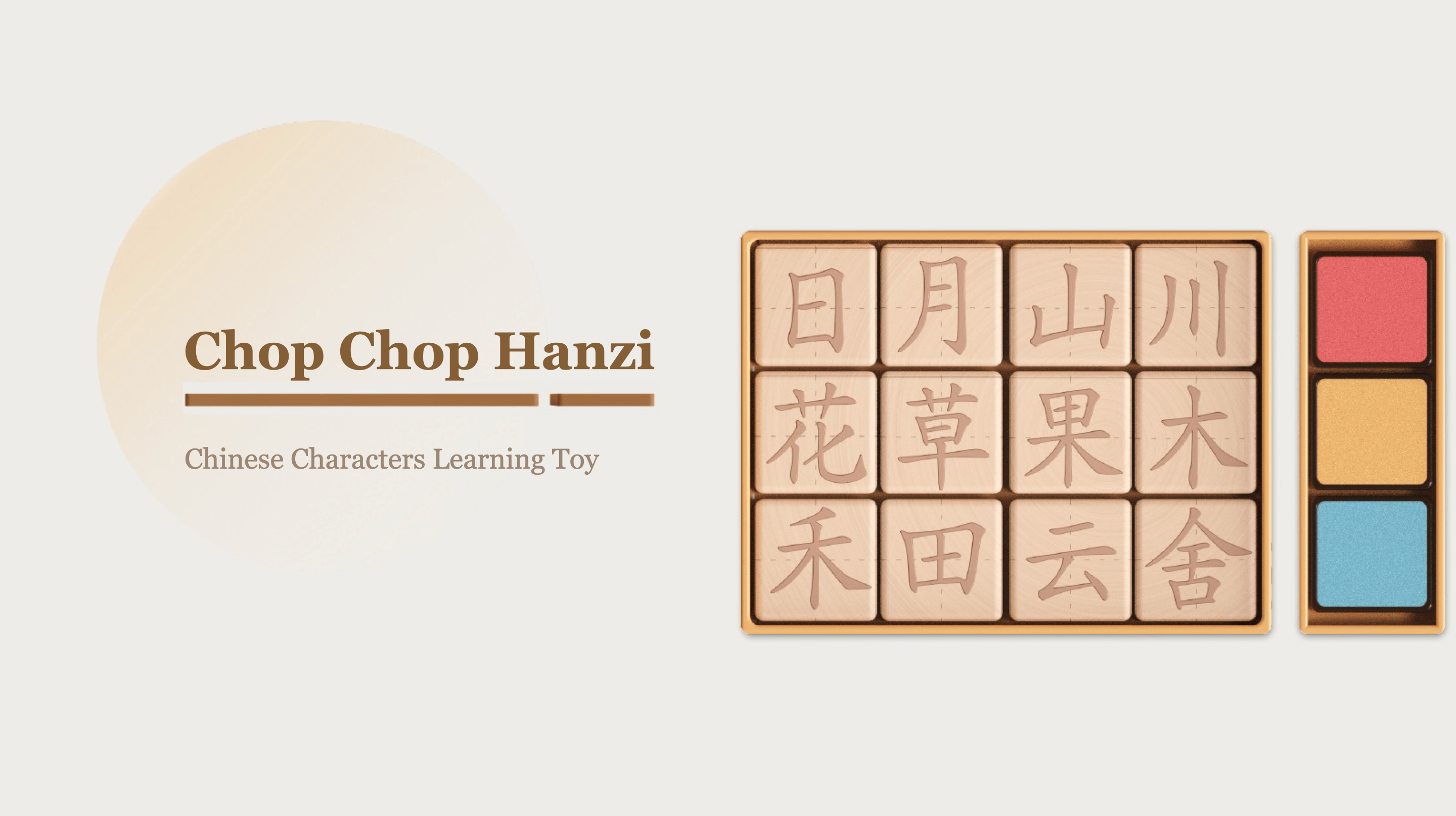
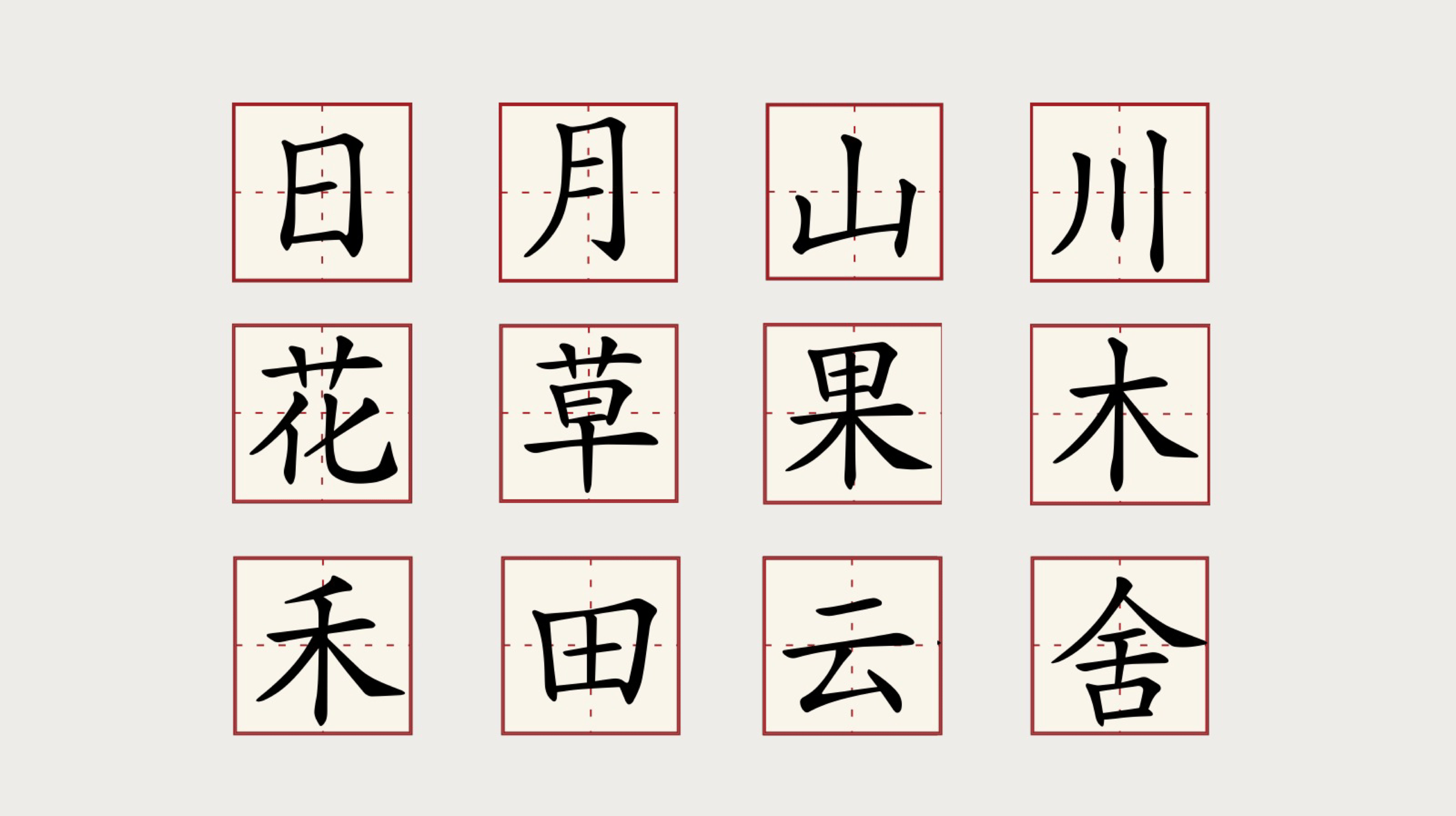
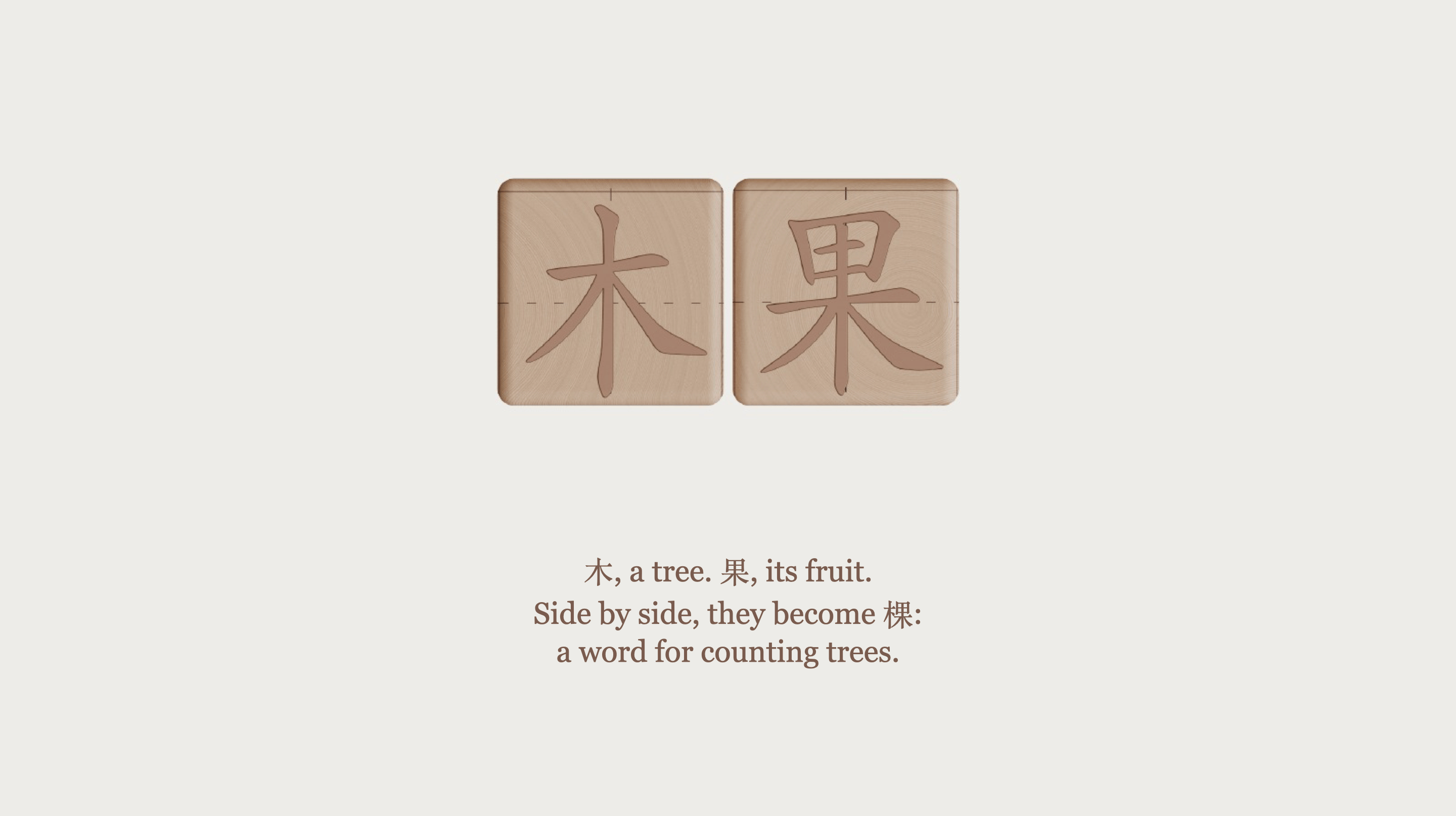
Many scholars believe Chinese writing grew out of pictures. Early “character-pictures” were both drawing and word. Our blocks return to that idea. A child stamps a character and sees it as an image first, then as a word. We chose twelve characters from modern Chinese that are beautiful in meaning, sound, and shape, set in regular script, the style most often used in children’s textbooks.

​

Design choices

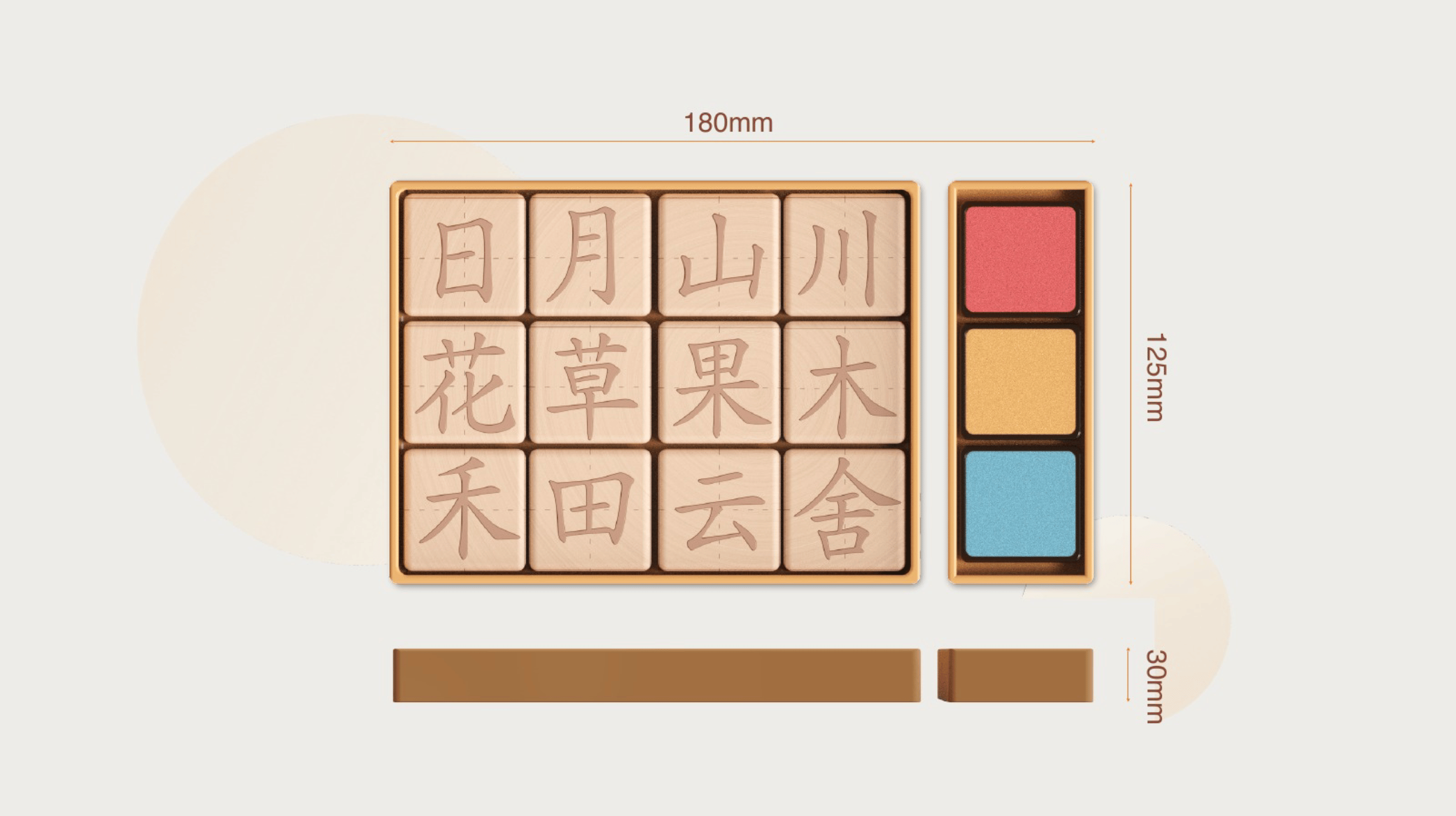
  • Proportion: The blocks follow the golden ratio (1:0.618), and the set is sized to slip into a backpack or handbag.
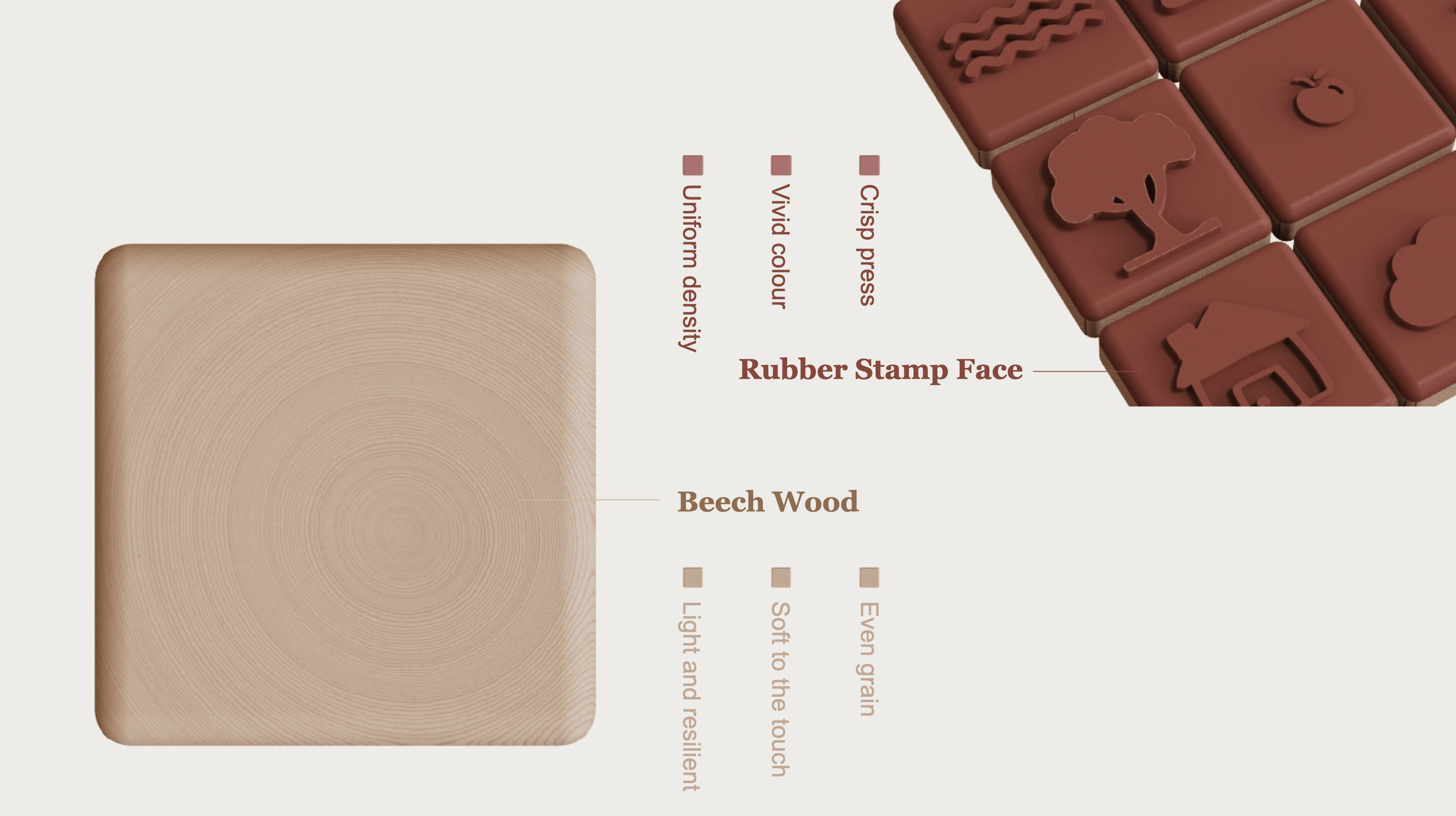
  • Material: We chose beech for its warmth and durability.
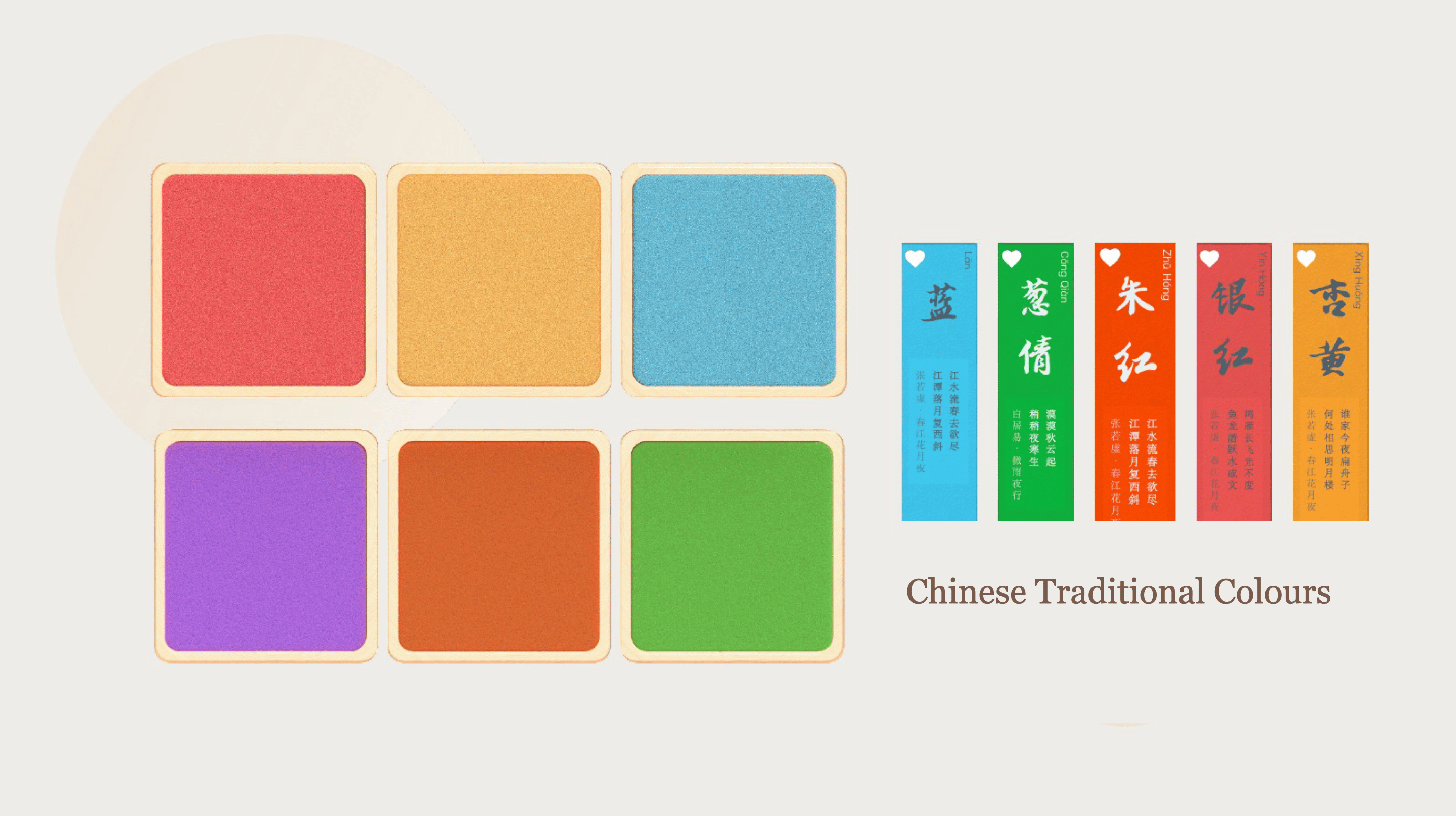
  • Color: Against light wood tones, we added vivid ink pads in traditional Chinese colors, including vermilion, apricot yellow, and scallion green. Pattern needs both variety and unity. Too plain and it fails to hold attention, too busy and it overwhelms.
  • Making: Blocks can be hand-carved by skilled woodworkers, or produced with automated edge-milling that cuts cost while keeping curved forms precise.
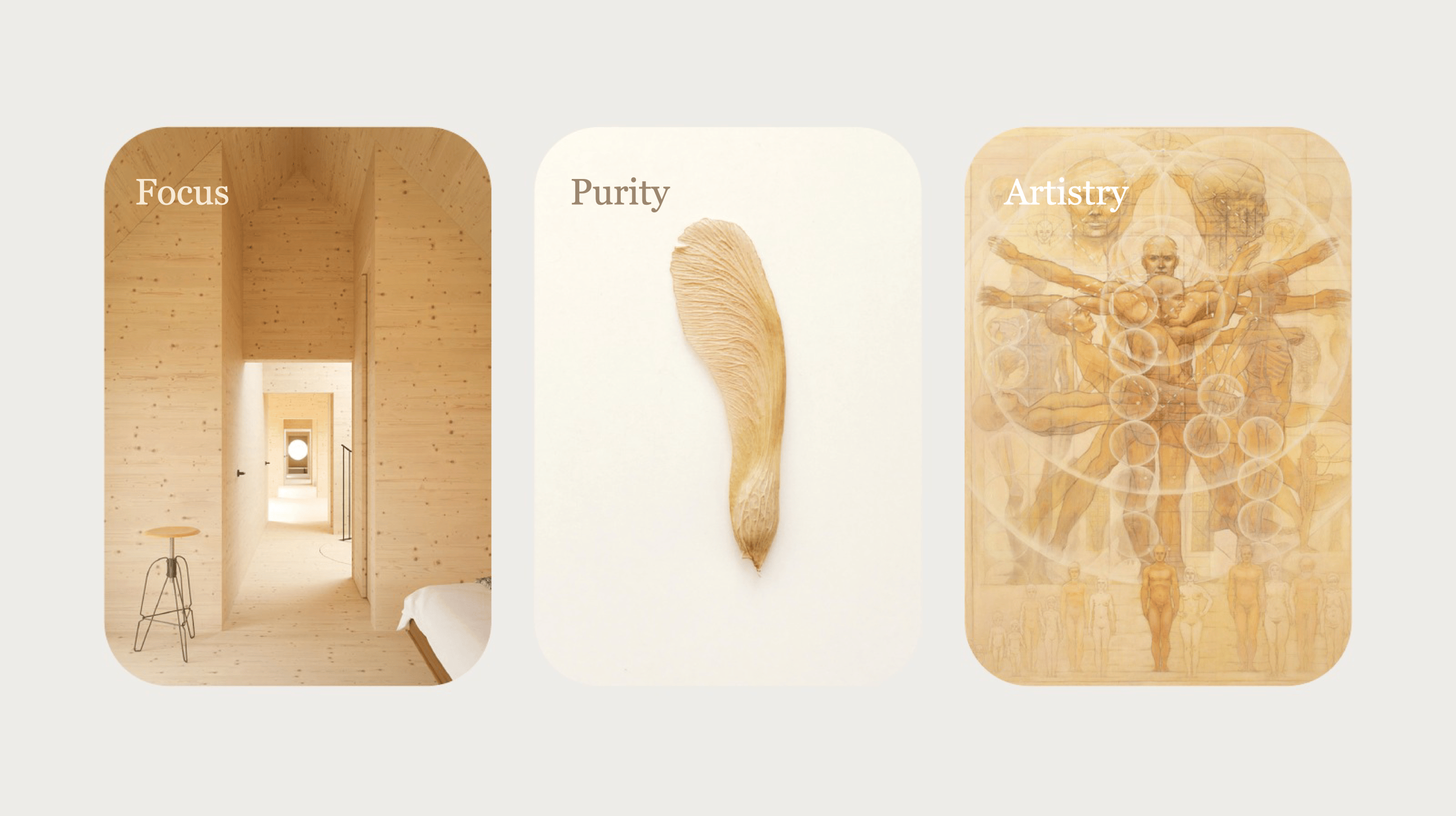
  • Mood: We wanted calm in a noisy world: fewer fragments, more focus.

​

Who it is for

We recommend the set for ages 3 and up, with adult supervision for children under 6. Ages 3 to 5 explore stamping, matching, and building. Ages 6 to 7 begin recognizing and writing characters, and the raised surface helps adults teach. The same stamp-painting activity can also support art-based rehabilitation for people with intellectual disabilities, where creating images helps build confidence and everyday skills.

Our research began with U.S. Consumer Product Safety Commission guidance on how toy features relate to play behavior. Safety remains central. Ink pads and small accessories should be non-toxic and tested to applicable standards, and kept away from children under 3.

​

Our goal

We want people to discover how playful and lovable Chinese language and culture can be, in the objects they hold every day. By giving a thousand-year-old craft a new form, we hope to make it something children reach for, families share, and the world admires.

April 2022

Chop Chop Hanzi

Educational / Learning Toy

An illustrative sketch of a flower

Summary

Chop Chop Hanzi reimagines familiar Chinese characters as objects of play and art. Chosen for the beauty of their meaning, sound and form, these characters find new life in contemporary design.

​

Rooted in Chinese cultural heritage in pictographs, the collection brings warmth and quiet poetry to simple, playful forms made to be enjoyed again and again.

  • Chinese Pictographs
    The world, drawn into words

    Some of the earliest Chinese characters began as simple drawings of the world: the sun, the moon, a tree, a mountain. Over time, these images evolved into written forms, carrying traces of nature within their strokes.

    ​

    日 (rì), the sun. 月 (yuè), the moon. 木 (mù), a tree. 山 (shān), a mountain.

    ​

    Pictographs form one of the foundations of Chinese writing. They invite us to see language as both meaning and image, where a few strokes can hold a whole world.

Stamp Building Blocks for Chinese Characters

Movable Type, Reimagined

The idea

Around the 11th century, the artisan Bi Sheng invented movable type in China, and wooden type later became its most influential form. In 2010, UNESCO inscribed China’s wooden movable-type printing on its List of Intangible Cultural Heritage in Need of Urgent Safeguarding. Today only a few craftspeople keep it alive.

We asked a simple question: what if this ancient technology could live on as a toy?

The answer is a set of wooden stamp blocks. Each block carries a Chinese character, raised so a child can feel it, stamp it, and build with it. Children love blocks because they can create and re-create with them. We kept that freedom and added something new.

​

Why characters?

Many scholars believe Chinese writing grew out of pictures. Early “character-pictures” were both drawing and word. Our blocks return to that idea. A child stamps a character and sees it as an image first, then as a word. We chose twelve characters from modern Chinese that are beautiful in meaning, sound, and shape, set in regular script, the style most often used in children’s textbooks.

​

Design choices

  • Proportion: The blocks follow the golden ratio (1:0.618), and the set is sized to slip into a backpack or handbag.
  • Material: We chose beech for its warmth and durability.
  • Color: Against light wood tones, we added vivid ink pads in traditional Chinese colors, including vermilion, apricot yellow, and scallion green. Pattern needs both variety and unity. Too plain and it fails to hold attention, too busy and it overwhelms.
  • Making: Blocks can be hand-carved by skilled woodworkers, or produced with automated edge-milling that cuts cost while keeping curved forms precise.
  • Mood: We wanted calm in a noisy world: fewer fragments, more focus.

​

Who it is for

We recommend the set for ages 3 and up, with adult supervision for children under 6. Ages 3 to 5 explore stamping, matching, and building. Ages 6 to 7 begin recognizing and writing characters, and the raised surface helps adults teach. The same stamp-painting activity can also support art-based rehabilitation for people with intellectual disabilities, where creating images helps build confidence and everyday skills.

Our research began with U.S. Consumer Product Safety Commission guidance on how toy features relate to play behavior. Safety remains central. Ink pads and small accessories should be non-toxic and tested to applicable standards, and kept away from children under 3.

​

Our goal

We hope people to discover how playful and lovable Chinese language and culture can be, in the objects they hold every day. By giving a thousand-year-old craft a new form, we hope to make it something children reach for, families share, and the world admires.

April 2022

Chop Chop Hanzi

Educational / Learning Toy

An illustrative sketch of a flower

Summary

Chop Chop Hanzi reimagines familiar Chinese characters as objects of play and art. Chosen for the beauty of their meaning, sound and form, these characters find new life in contemporary design.

​

Rooted in Chinese cultural heritage in pictographs, the collection brings warmth and quiet poetry to simple, playful forms made to be enjoyed again and again.

  • Chinese Pictographs
    The world, drawn into words

    Some of the earliest Chinese characters began as simple drawings of the world: the sun, the moon, a tree, a mountain. Over time, these images evolved into written forms, carrying traces of nature within their strokes.

    ​

    日 (rì), the sun. 月 (yuè), the moon. 木 (mù), a tree. 山 (shān), a mountain.

    ​

    Pictographs form one of the foundations of Chinese writing. They invite us to see language as both meaning and image, where a few strokes can hold a whole world.

Stamp Building Blocks for Chinese Characters

Movable Type, Reimagined

The idea

Around the 11th century, the artisan Bi Sheng invented movable type in China, and wooden type later became its most influential form. In 2010, UNESCO inscribed China’s wooden movable-type printing on its List of Intangible Cultural Heritage in Need of Urgent Safeguarding. Today only a few craftspeople keep it alive.

We asked a simple question: what if this ancient technology could live on as a toy?

The answer is a set of wooden stamp blocks. Each block carries a Chinese character, raised so a child can feel it, stamp it, and build with it. Children love blocks because they can create and re-create with them. We kept that freedom and added something new.

​

Why characters?

Many scholars believe Chinese writing grew out of pictures. Early “character-pictures” were both drawing and word. Our blocks return to that idea. A child stamps a character and sees it as an image first, then as a word. We chose twelve characters from modern Chinese that are beautiful in meaning, sound, and shape, set in regular script, the style most often used in children’s textbooks.

​

Design choices

  • Proportion: The blocks follow the golden ratio (1:0.618), and the set is sized to slip into a backpack or handbag.
  • Material: We chose beech for its warmth and durability.
  • Colour: Against light wood tones, we added vivid ink pads in traditional Chinese colours, including vermilion, apricot yellow, and scallion green, etc.
  • Making: Blocks can be hand-carved by skilled woodworkers, or produced with automated edge-milling that cuts cost while keeping curved forms precise.

​

Who it is for

We recommend the set for ages 3 and up, with adult supervision for children under 6. Ages 3 to 5 explore stamping, matching, and building. Ages 6 to 7 begin recognizing and writing characters, and the raised surface helps adults teach. It can also support art-based rehabilitation for non-verbal people, where creating images helps communication and everyday skills.

​

Our research began with U.S. Consumer Product Safety Commission guidance on how toy features relate to play behaviour. Safety remains central. Ink pads and small accessories should be non-toxic and tested to applicable standards, and kept away from children under 3.

​

Our goal

We hope people to discover how playful and lovable Chinese language and culture can be, in the objects they hold every day. By giving a thousand-year-old craft a new form, we hope to make it something children reach for, families share, and the history remenbers.